
Journey’s end: has tourism had its day?
Leisure travel needs a Christian sense, argues Joseph Evans, to save it from being mere exploitative tourism and even from its own demise.
Recent data projects a drop in long-haul travel with more people opting to journey in Europe itself, and various writers have been reflecting on this question.
In this long, at times dense but generally excellent article, Grant David Crawford explores what he considers a certain disillusionment among ‘Western’ young people around the very phenomenon of travel. (That word ‘Western’ is an important one and the author explores it at length.) I draw out four reasons from what he writes.
Reason one: “Travel is getting harder.”
As Crawford explains, borders and visa restrictions are tightening. “Inflation has hollowed out the middle-class travel budget.” So many places in the world are falling apart, and many of the people we used to go to visit (as quaint ‘locals’ to observe) are now coming to us as unwanted migrants.
Reason two: young people question the very legitimacy of travel
Or what Crawford calls, the ‘saturation of post-colonial critique’. In other words, we’ve spent so long trying to convince young people that travel is just the latest iteration of colonial abuse of other peoples and places that they have started to believe it.
From this point of view, ‘Western’ tourism involves us going with assumed superiority to exploit the places we visit. We turn the local people into our servants (paid, but badly). We reduce beautiful scenic spots to tourist traps. And we pollute the environment with our carbon footprint. And young people, says Crawford, are starting to get uncomfortable with this.
Reason three: the loss of the search for meaning
This third motive is what Crawford describes as ‘a quiet exit from the assumption that travel is where meaning is found’.
In the past, people used to travel to ‘elsewhere’ searching for meaning. Now, in a post-Modernist world, many young people no longer search for meaning beyond themselves.
Reason four: the internet
In our internet saturated lives, where everything is so fragmentary, and which therefore makes any search for meaning a harder task, people have seen everything!
As Crawford writes, “the imaginative territory is, for the first time, exhausted (minus outer space, but that’s a topic for another day)”. In the past, there was some exotic imaginary ‘elsewhere’ to go to. Now we sort of know about everywhere. We just need to follow some influencer to get a virtual tour of the world.
But is he right? As a university chaplain who lives with young people, I mentioned the above ideas to some students in my house and asked them what they think.
They weren’t impressed. First of all, they questioned the premise that young people travel less. They accepted that some may feel qualms about carbon footprint but the qualms are quickly overcome when the prospect of visiting some exciting place presents itself. The sight of exotic locations only stimulates the desire to visit them. And, they asked, do we really travel – have we ever done so – for meaning? Don’t we all, in fact, just travel for experience?
But I still think Crawford’s article makes many good points, above all by simply raising questions about the meaning and future of tourism.
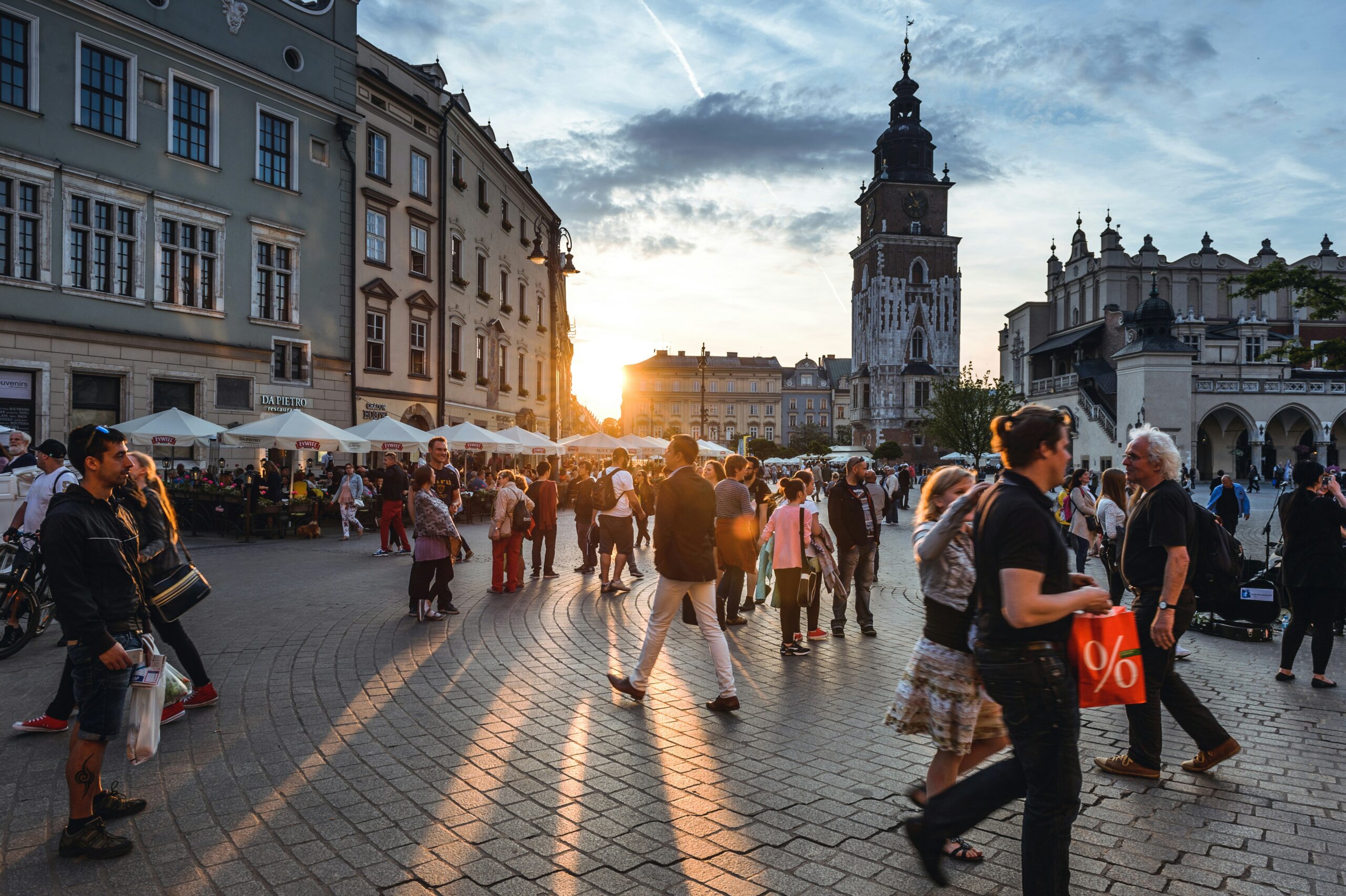
But now on to our second article, this one by a regular Adamah Media author, the ever-stimulating Monica Sharp. She herself had read and, like me, found much to chew over in Crawford’s piece. But it led her to ask her own questions as someone who has travelled a lot and thought a lot about the whole endeavour.
Why do people travel?
This is just the question she asks herself in this fascinating article. And she offers various possible motives.
“For a significant portion of the general population”, she writes, “travel represents a consumer good. You buy it, you consume it, you bring the trophy home and display it. At best, it confers bragging rights; at a more aspirational level, it functions as a shortcut to cultural capital, a cube of sophistication dropped into your head where your brain is supposed to be.”
She would like people to prepare for travel to be able to engage more meaningfully with the places they visit. “Who’s taking language or history before travelling to understand where they’re going? Whose top goal is to be respectful of a destination, rather than going all-out with the ‘I saved for this, I’m going to make the most of it’ attitude?”
Though she herself recognises this is somewhat idealistic.
And should a visit to some place bring about change in us? Monica answers:
“I believe that many people do not want to be changed, not fundamentally. Change, in whatever form it comes calling, is almost always uncomfortable, and (almost always) carries a cost in the form of what we discard, or what is discarded for us.”
The questions multiply: “Is ‘enlightenment’ even possible, in any meaningful sense, and if it is, does a long-haul flight burning several tons of carbon into the atmosphere represent a reasonable price of admission? What about the overrunning of quiet capitals and historic neighborhoods, the Venice problem, the Lisbon problem, the Barcelona and Amsterdam and Paris and London and Berlin problem, the problem of every beautiful and fragile place that has become an itinerary stop?”
Finally, she admits she has no answers but merely ‘a great many questions’. And she concludes by inviting comments.
Incarnation and Ascension
I don’t claim to have all the answers either. Indeed, I add my own questions. If tourism is in the dock, how can we save it? Should we even try? Is it time to give up on travelling, and even (in the name of saving the planet and our capitals) to give up on any enlightenment it might offer?
In order to answer them, and to propose a fresh vision of travel, I would like to offer a few thoughts based around the feast we have been celebrating these days in the Christian world, namely the Ascension, which itself is all about a journey. Indeed, it is the ultimate journey, to heaven.
Much of the canon of great literature is premised on the idea of a journey: think of the Odyssey, think of Don Quijote, think of Lord of the Rings, and you have only just begun. Often the journey is more interior than geographical. A character goes somewhere – be that a physical place or into a spiritual and psychological trial – faces all sorts of challenges there, and returns forever changed. (A tragedy would be when they fail to meet the challenge.)
And something similar could be said of Christ. According to Christian traditional belief, he makes a journey from heaven to earth, stripping himself temporarily of his divine prerogatives to become man. While on that journey, he sacrifices his life to save his beloved (i.e. us), but so great is his love that it is stronger than death and he rises again from the dead. Then, after 40 days on earth, he goes up – ascends – to heaven to return to the side of his father God, fully triumphant, his humanity now glorified, to rule over all creation.
This follows perfectly the archetype of the best of Western literature. Descent into a situation involving loss and a great challenge so as to rise from it transformed and triumphant.
But actually this has to be the archetype of any worthwhile human life: the willingness to come out of our comfort zone, to lose something at least, to face a challenge and to rise above it. And this is why we travel, to do just this, in miniature. And this mentality would give meaning to all our travelling.
For whether one believes in the divinity of Jesus or not, one can learn from him how to travel.
Any meaningful journey begins with humility, the willingness to lose some of our privileges and to go to another place, not with a sense of superiority but rather with one of service, ready to meet people at their level. Jesus made clear, “I am among you as one who serves.” And he came to learn too, in his human nature, so we see him among the doctors of the Law asking them questions.
That is why, for all the many merits of his article, I must dispute Crawford’s ideas about voluntourism. In the social projects I took part in there was love on both sides, love given and received, which made them much more than a search for experience and, indeed, gave them meaning.
If one truly goes to a poor community to serve and to learn, one gains so much, and one can give a lot too. As Jesus did among the poor of Palestine.
But there has to be loss. Obviously, any journey at the very least involves a loss of money and of time. But one should be ready to lose more too. Prejudices, a sense of superiority, one’s comfort. This is the necessary change Monica talks of.
Jesus lost his life. We would naturally hope not to lose so much on our travels, but the more we are ready to lose – for love – on any journey, the more we and others will gain from it.
Any worthwhile journey involves some form of dying to ourselves. Our arrogance, narrowness, presumed Western preeminence, selfishness, softness, attachment to wealth, must all in some way die.
And then we are ready to rise again to a better form of existence where, with the improved mentality – more humble, more open-minded, less pampered – we have acquired, we can start to lead a new life, which we can also share with others.
But even that is not enough. Because life must become an ongoing series of ascents, rising from our old ways – maybe also through other forms of travel – to achieve ultimately a new level of being. We Christians would see this reaching its peak when, by God’s mercy, we reach heaven.
Yet even those who do not share this faith might see in the Ascension an archetype. Jesus rises from the dead but he does not stay on earth. It does not fully satisfy him. Some people stop short at a low-level triumph when aiming ever higher, refusing to bask in that triumph, is what would really fulfil them.
To make the best of any experience, you have to aim beyond that experience.
Because sooner or later that experience, for being finite and limited, will start to cloy.
For all its downsides, travel is good and enriches our personality. Perhaps the cynicism Crawford noted among his students arises from a deeper ennui at the lifestyles and narratives they are being fed.
Indeed, travel is essential to save us from bigoted nationalism, as I argued some years in this article where I wrote. “We must not go back to the narrowness and nationalism which isolationism fosters, that insane blindness which makes us think we are the best simply because we have not experienced others.”
It is right to be concerned about the environment but technical solutions can be found. If we invested in this what we invest in war, we would soon find environmentally friendly ways for many people to move around and discover each other.
And Christians and other men and women of good will should be at the forefront of welcoming others, particularly the poor, to our own lands, as immigrants or merely as visitors in subsidised travel, be it for education or tourism. Why should only the rich enjoy the right to roam?
With a few obvious exceptions – journeys made for what all would consider evil motives – we shouldn’t try to police travel by legislation. But we can use education to help our young people value travel as a learning, humbling and self-giving experience where we go to give and not just to take. Certainly, this giving will involve our contribution to the local economy but creative forms of service and encounter in these lands could also be weaved into many forms of travel, particularly for the young.
Why travel? For the reasons Christ travelled in humility to earth and returned in glory to heaven. To give ourselves in service, to enrich our own humanity and that of others, and, as St John says in his gospel, ‘to gather into one the scattered children of God’.

Joseph Evans
Fr Joseph Evans is a Catholic priest and a member of Opus Dei. He has worked as a journalist and youth worker, and is currently a university chaplain in Oxford. He is co-founder and Editorial Director of Adamah Media and a poet. His most recent work, “When God Hides”, was published by SLG Press in 2025.

