Consumer safari: the semiotics of shop windows
Does luxury fashion add to or strip us of our identity? Walking down Via Tornabuoni in Florence leads Monica Sharp to ask some tough questions.
Living in Florence, I routinely see tourists emerging triumphantly from Louis Vuitton with those thick, goldenrod paper shopping bags — the contents of which, I’ve since learned, run into something like ten thousand euros, or about half a year’s wages for the average Italian.
And add to that the price of staying in Florence on such a spending spree. A luxury suite in Florence will easily set you back €1200 per night, roughly a month’s rent for that same average citizen.
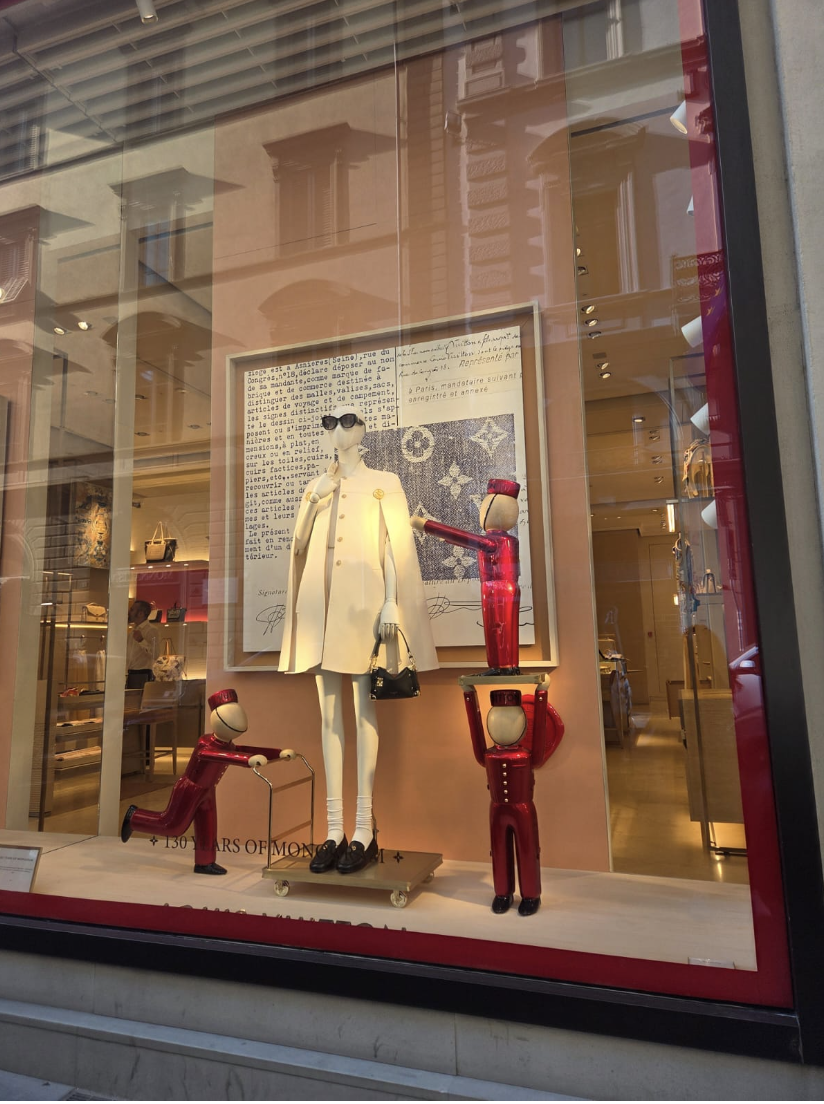
Row upon row of luxury shops line the city’s center blocks, especially along Via dei Tornabuoni, Via Roma, Via Calzaiuoli: Louis Vuitton, Burberry, Tiffany’s, Christian Dior, Stella McCartney, Van Cleef & Arpels, Rolex, for crying out loud, and more and more and more, their shop windows glittering, enormous, and suffering deeply from political lag.
For in a world where the wealth gap increases daily, where inflation and economic crises disproportionately impact lower-income families and people, what does it mean to offer an array of high-end accessories and apparel to the well-cushioned and already comfortable?
The windows advertise a broader cultural logic about who deserves to have nice things and what kind of world they deserve to live in. Do the haves really deserve to have this much, while the have-nots have ever less? Do the healthy have a right to maintain their position and wealth in this world? Must the poor accept that they will remain poor and indentured to an unjust economy?
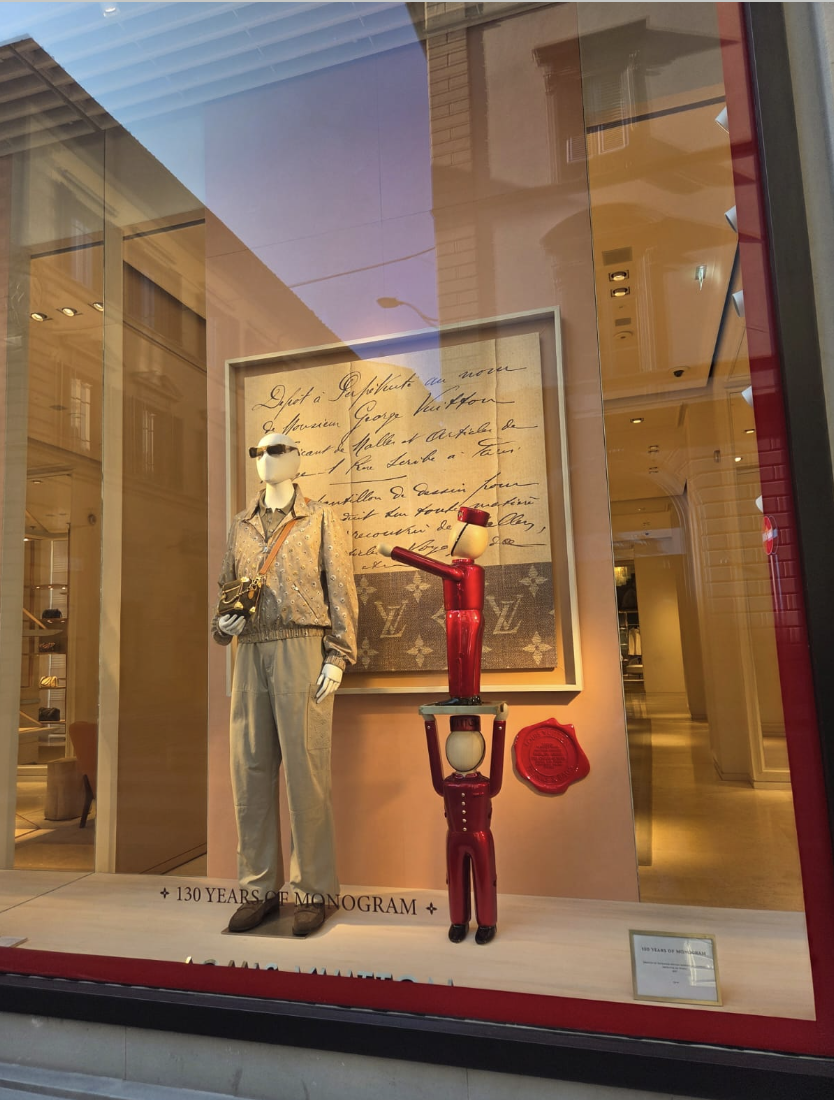
I can’t walk past them without wanting to unpack all that. Where is the morality? Is this fair? Who are these rampant consumers? Must it continue? Why does this happen? How can it be justified? What does it all mean?
A caveat, and an important one: Florence has standing. This is not merely a city that luxury brands have colonized for the tourist traffic.
Gucci was founded here. Ferragamo is headquartered here, and the museo on Via Tornabuoni is genuinely interesting. Pucci. Cavalli. The leather and goldsmithing traditions that continue to animate the Oltrarno workshops are the deep substrate from which so much of what we call Italian luxury actually grew. Pitti Uomo happens here twice a year, and the people who attend it are not tourists shuffling around the center with goldenrod bags: they are the people who decide what goes into them.
Florence’s relationship to fashion is real, and old, and complicated, and it deserves more than a flagship outpost of a French conglomerate whose goods are manufactured in the same Southeast Asian factories as everyone else’s.
But the shop windows along Via Tornabuoni are not evidence of Florence’s fashion heritage. They are evidence of what happens when that heritage becomes commodified.
Where I grew up in oil-saturated Oklahoma in the seventies and eighties, brand-name awareness was not vanity — it was literacy. The received idea of luxury was the so-called ‘trunk show’ at Balliet’s in 50 Penn Place, well within the aspirational orbit of new oil money, but a different universe from this.
I only read about these events in the pages of The Daily Oklahoman. Cruise wear! Resort wear! Mid-season! I wondered what else was in that trunk, not realizing it was shorthand, a vestigial metaphor. What I knew then I gleaned from Vogue and Vanity Fair and Elle circa 1987.
Knowing the right names and wanting the right things signaled that you understood the socioeconomic map and where you hoped to land on it.
There was a clear progression, and most people I knew were somewhere in the middle of it. I really want that. I can never have it. Then, if things went well: I really want that. I can have it. Then the arrival: I really want that. I can have it now. And finally, the effortless destination that everyone was supposedly driving toward: This is normal for me.
Each stage was legible, aspirational, and in its own way optimistic — the belief that desire and effort and the right purchases could lift you into a different life. I understood that logic completely. I was educated within it.
But trunk shows evolved into a very different form from their origin in the literal transit of garments in steamer trunks by peripatetic 19th-century salesmen.
The much-vaunted Oklahoma trunk shows were rooted in that history, and became a highly choreographed retail ritual wherein a ‘luxury boutique’ temporarily transforms into a high-stakes showroom for a designer’s Upcoming Collection, presenting a platonic ideal of clothing that did not yet technically exist in the commercial marketplace.
The event invited VIP guests (read: people with a high tolerance for prosecco and pre-payment) to try on runway samples held together by sheer willpower and the terrified creativity of the designer’s assistant.
The essential hook was the Pre-Order: a financial commitment to a garment not manufactured or delivered for six to eight months, allowing the consumer to purchase the future state of her own wardrobe, thereby bypassing the plebeian uncertainty of what the store’s buyer might actually stock.
There is also a Customization Clause, whereby the designer agreed to minor alterations (”Could we raise the hem so as not to drag through the slush of a Milanese winter?”), providing the shopper with a fleeting, intoxicating sense of being a Co-Creator rather than a mere Purchaser.
But somewhere between Oklahoma City and Florence, and all the stops in between, something curdled.
Now when I see the goldenrod bags and the shuffling and the consumer safari, my reaction is not longing but closer to: I will never want that, precisely because everyone else does.
The yearning itself gives me the ick — the greed made visible, the desire performed for an audience. I don’t think I’m better than the people carrying those bags. I think I’m just differently conditioned, and possibly more alienated, which is not necessarily the same as more enlightened.
It begs the question: who treats Italy as a primary destination for Louis Vuitton? Is it the starry-eyed tourist who has spent years penny-pinching for a single, definitive ‘dream trip’?
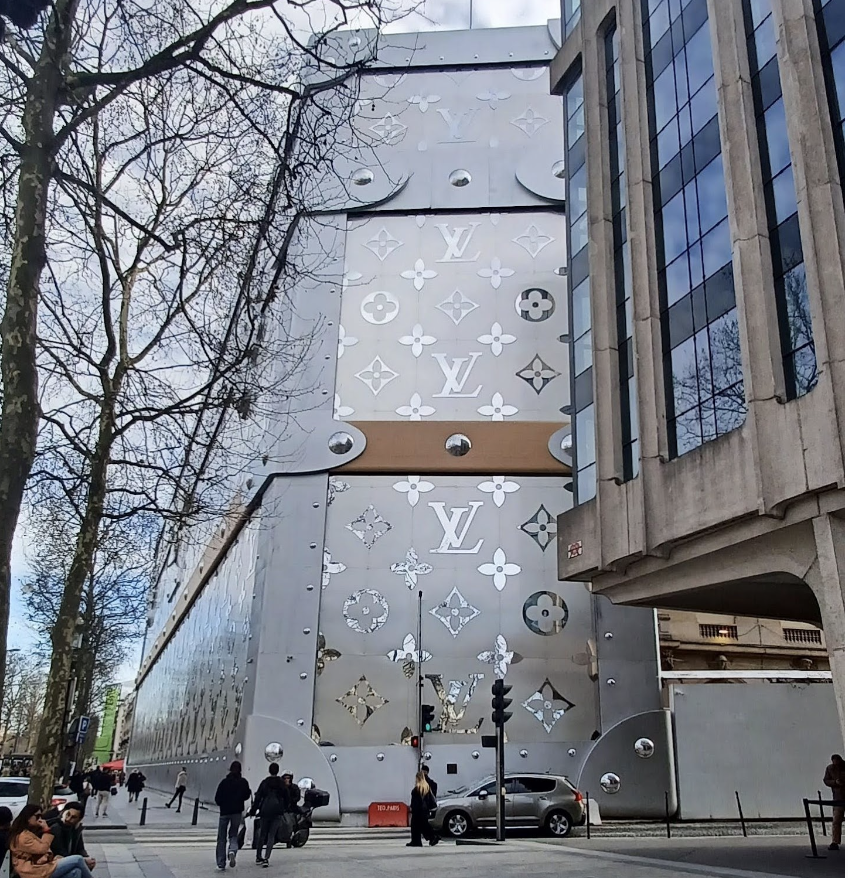
The logic feels misplaced. Louis Vuitton is, after all, quintessential French luxury. My own volunteer work frequently brings me to Paris. Tucked away in the 8th Arrondissement near the Avenue George V sits the Louis Vuitton flagship store. If we’re going to discuss the ‘dark star’ of modern consumerism, that specific corner of Paris is where the gravity is strongest. Why not report to the motherlode for the goldenrod bags of LV loot?
I understand that certain tourists come to Florence on a ‘shopping holiday’ to tote those bags everywhere, like a big game trophy secured on a consumer safari. (Though I seriously doubt any locals shop in these high-end places. These are almost certainly and strictly tourist destinations.)
But does the cultural cachet lie in the specific fact of buying luxury goods abroad, at the source, on holiday — so that the purchase and the destination collapse into a single trophy? Because watching the tourists shuffle around the Piazza della Repubblica, their haul trailing behind them, I keep asking myself: why?
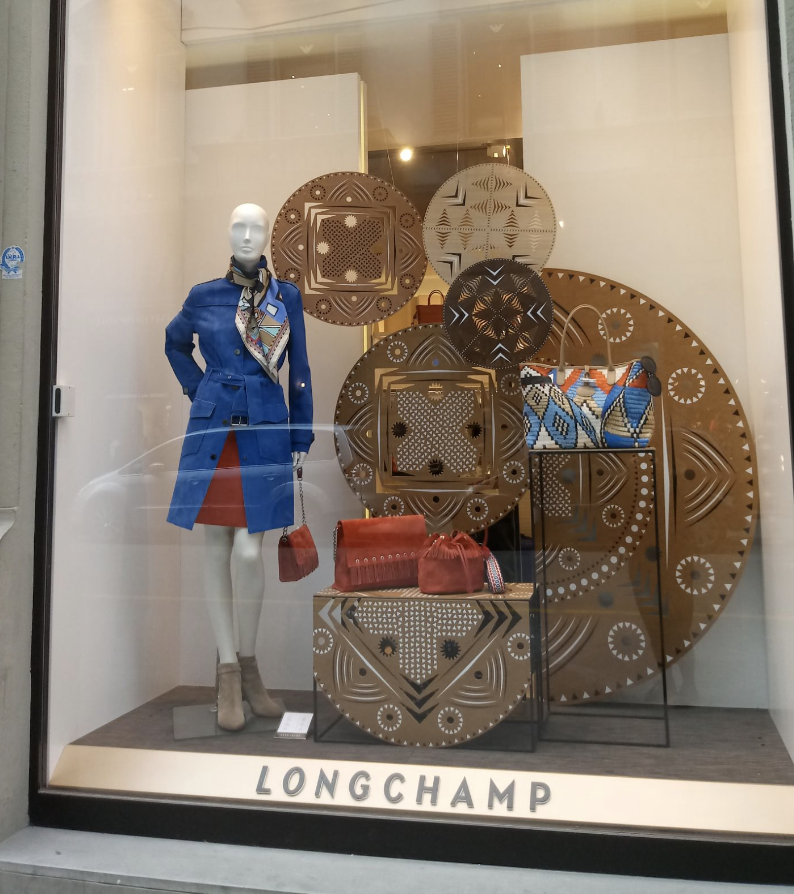
And isn’t everyone by now aware that luxury goods — and fashion in particular — represent the very opposite of fair trade? Blood diamonds and sweatshops, fast fashion and labor abuses, garment factories in Southeast Asia and China that blip across the news cycle every now and then for accidents and loss of life on the scale of Triangle Shirtwaist (1911 New York City, 146 young immigrant seamstresses killed), which ushered in a brief American distaste for immigrant labor abuse before simply offshoring it.
And what long-lost aristocratic lifestyle do these luxury goods hint at? A stable of racehorses (Hermès, Longchamp), a lamented and distant noble heritage (Van Cleef & Arpels, Cartier), a kind of virginal desirability and vast dowry (Burberry, Dior)?
The global economic calculus that makes luxury goods possible is not a secret. Retail prices are high, but upstream, people are paying with low wages and years off their lives — if not their lives themselves.
(A study abroad student here once confided to me in 2019: “It’s my birthday, so my mom told me to go have a splurge at Gucci.” The way she said it made clear she expected me to agree with her. I felt rather ill to hear that level of entitlement issue forth so smoothly.)
Which brings me to an important point: the difference between being a member of a group and being an exemplar. In the U.S. status tends to work by individual comparison — “I’m not rich, look at her, she’s rich” — because there’s always someone whose position supersedes yours. The reference point is a person, not a category.
But luxury branding operates on group logic: you’re not buying a bag, you’re buying into a membership.
In America, where everyone is positioned as a unique individual and tribal identity carries relatively little cultural premium, that’s a strange pitch. Status is meant to be specific to you — a personal achievement — rather than a function of shared economic standing produced by converging cultural, historical, and economic forces.
The bags say otherwise.
This is a slightly edited version of an article which first appeared on Monica’s Substack Sharp Monica. For other stimulating articles by her, click here. This article is re-published in Adamah Media with her permission.

Monica Sharp
Monica lives and works in Florence, Italy. Her international spirit travels with an American passport but she's long since lost count of all the relevant metrics. She currently moonlights as a legal researcher for a local law firm, and prior to that, pursued careers in international education and software. Her off-hours in Italy are filled with a creative buffet of writing, art, music, reading, parenting, and more. Monica frequently writes about cultural forays, interpretive adventures, and close observation.

