
Women need to feel safe to be beautiful
Unsolicited attention and inappropriate gazes kill the feminine, argues Delphine Chui.
I am a big proponent of beauty for beauty’s sake. I agree with Dostoevsky that beauty will save the world. It’s why I enjoy seeing a woman (or man) dressed up, even if some would call them overdressed for the occasion. Surely any day we’re here is an occasion?
I love beautiful buildings, beautiful food, beautiful art, beautiful music, beautiful interiors, beautiful manners and beautiful etiquette. And I think it’s good citizenship to be a source of beauty for the world: to offer a morning smile to the stranger you pass on the street, to wear colour in a sea of neutrals (which isn’t to say I don’t also appreciate neutrals) and to be present in the throes of faces buried in phones.
But, sometimes this embodiment of beauty bites you in the butt.
This past month alone, I’ve been harassed by men who did not seem to hear or respect my first, second or third ‘no’. These experiences didn’t only leave me feeling stumped, but scared. At a time when I’m trying to let the ‘Type A’ part of my personality be more carefree, my need for vigilance seems annoyingly to be growing.
And every time, I question myself over-and-over again as I wrestle to get to sleep. Was I too polite? Too smiley? Did I say ‘hi’ too many times when passing on the street? Have I let myself get too familiar?
A recent piece I shared was about anonymity, and how I was falling into it too easily. Solitude, it turns out, is not only very comfortable, but incredibly frictionless because it’s easy to build a beautiful life for yourself when you feel completely safe in your own company.
It is after all safety which creates the conditions for beauty, because beauty requires a degree of receptivity and unguardedness.
But that very openness is difficult when we are preoccupied with self-protection.
Recently I’ve been enjoying a new joie-de-vivre attitude of embracing and being ready for the unplanned adventure. Instead of dressing up for specific social plans only, I now wear nice outfits from the get-go, just because.
Instead of only meticulously tidying my home and using the best tableware for dinner parties, I ensure my flat is always ready for spontaneous hospitality. It’s been quite life-changing as I’ve been able to extend a genuine invitation of ‘drop by whenever’ to neighbours and friends who have swung by with only a few minutes’ notice.
A village vibe hidden in a suburb of city life.
Until these instances.
Now, I spy a stack of dishes I feel too overwhelmed to wash and find myself putting on my baggiest clothes, covering my face with sunglasses, clutching my phone in my hands like it’s my lifeline and avoiding all eye contact.
It’s as if I don’t want to be beautiful, warm, charming, or sweet because I don’t want to attract attention. I don’t want to be seen through the unwelcome gaze of another. What I want, more than anything, is to be safe and to feel safe.
And I realise that this is what happens when women don’t feel safe: we can’t be beautiful.
How can we desire to bring beauty to a world that is potentially threatening to us, or distorts the beauty we have to offer? Sometimes precisely because we don’t want to invite harassment, we hide our light under a bushel.
We hide our beauty which is invitational in nature (since a woman’s beauty is in how she curates, styles, words things, and how she sees, observes, listens and comforts people) when we’re met with force.
What a crying shame in a world that is crying out for more beauty and more invitation. But if someone puts their foot in your door to pry it open by force, the free invitation can never be extended.
Philosophically, beauty is always connected with vulnerability.
Beauty makes something worth approaching, looking at, cherishing and even loving. But that means beauty involves the vulnerability of allowing ourselves to be perceived.
This isn’t about adornment as beauty, but rather, the embodiment of beauty… because the opposite of beauty isn’t ugliness, but a defensive posture produced by fear.
The biblical imagery in Genesis of Adam and Eve being ‘naked and not ashamed’ does not show a sexual state, but human persons fully exposed without fear or shame because beauty flourishes where there is no need for self-protection.
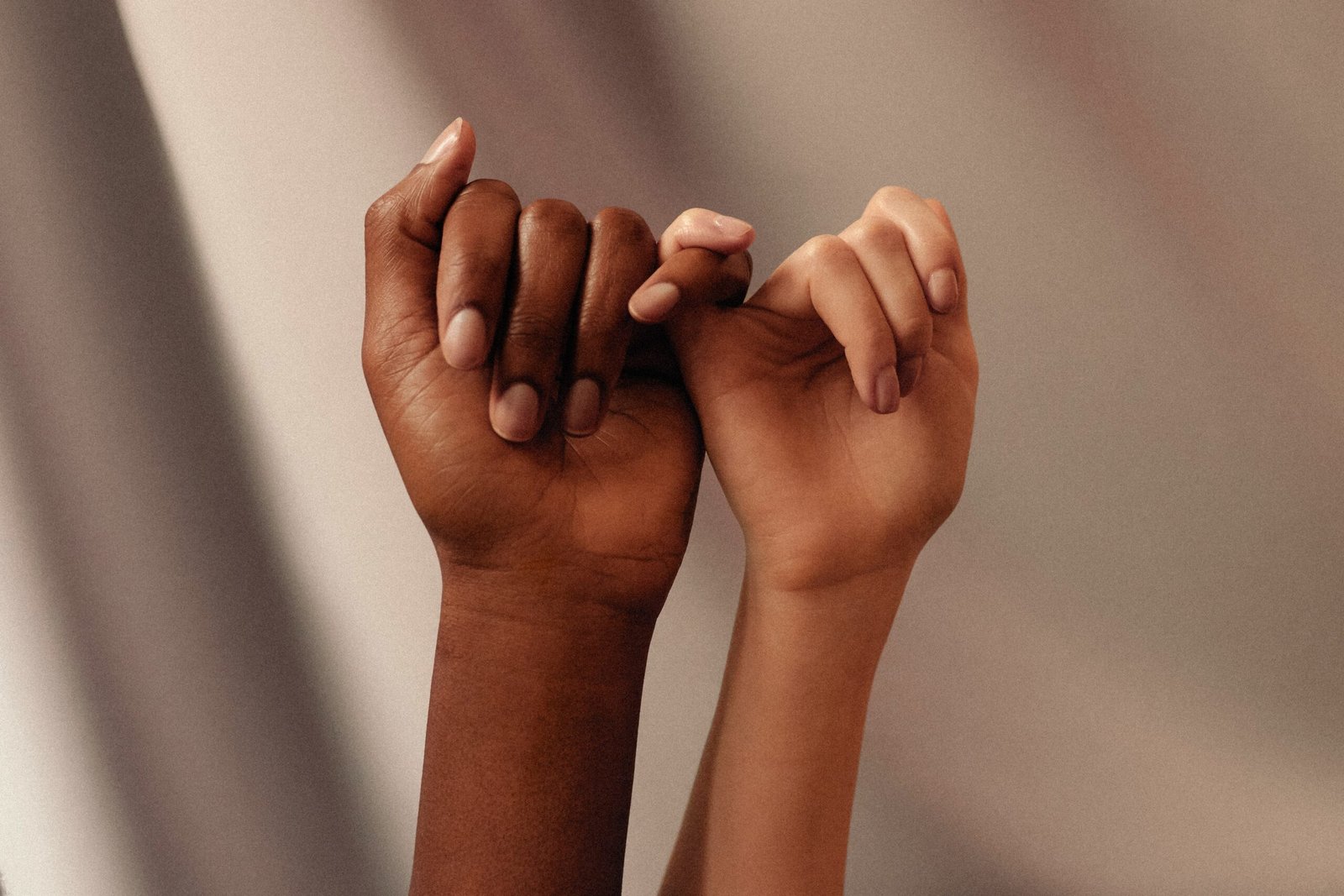
To be beautiful is not simply to possess beauty, charm, a good dress sense or to know how to move through the world with confidence. The most beautiful of beauty comes from being open, from being able to be soft, to laugh freely, to take up space without fear, to let yourself be seen without vigilantly wondering whether or not you’re safe.
And perhaps that is why beauty can sometimes disappear from people.
Oftentimes what looks like hardness is actually a wound, what looks like coldness is self-protection, and what looks like insecurity is a person who has learned that being seen can come at a cost.
What might look like a woman who has lost her softness may simply be a woman who has had to harden herself and become guarded.
Whenever we encounter a lack of beauty in the world, we must approach with charity and curiosity. What wound made this person afraid to open up? What did they have to survive that taught them to become hard? What would it take for them to feel safe enough to soften again?
Beauty in itself is not fragile, but it needs the conditions to emerge safely. And one of the most beautiful things we can do for another person is to become the kind of presence around where they no longer feel they have to protect themselves, but that they are safe enough to be fully themselves: soft, seen and beautiful.
This article was first published in Delphine’s Substack Delphine Discusses. Check it out for more beautiful and challenging reflections on culture, relationships and modern womanhood, grounded in faith.

Delphine Chui
Delphine Chui is a writer, speaker and charity founder exploring the intersection of faith, the human person and modern culture. She writes for The Catholic Herald, serves as Senior Editor of Media, Arts & Culture at Restoring the West, hosts video content for SPUC and the Christian dating app SALT, and founded CareDogs, a befriending charity tackling loneliness and social isolation. Across her work, she is driven by a desire to strengthen our social fabric by helping people build healthier relationships, stronger communities, and lives rooted in purpose. You can connect with Delphine on @delphinediscusses on Instagram, YouTube and Substack and @delphinechui on X.

