The soul of a place: Britain’s moral geography
We must rebuild our relationship with place, urban and rural, to re-build the moral and spiritual life of this country, thinks Aaron Britton.
Every civilisation has known that certain places are closer to the divine. The Greeks built temples on hills; the Celts worshipped by springs; the medieval world raised cathedrals whose spires pointed to heaven. Even the atheist feels something in an old church or a quiet field.
Modern Britain often treats space as interchangeable. That it is simply a postcode, a property, a yield. But there was once a deeper grammar to geography. Villages grew around wells, churches and markets. They grew around life and what sustained it. Each had a moral centre and that centre grounded people in time, tradition and transcendence.
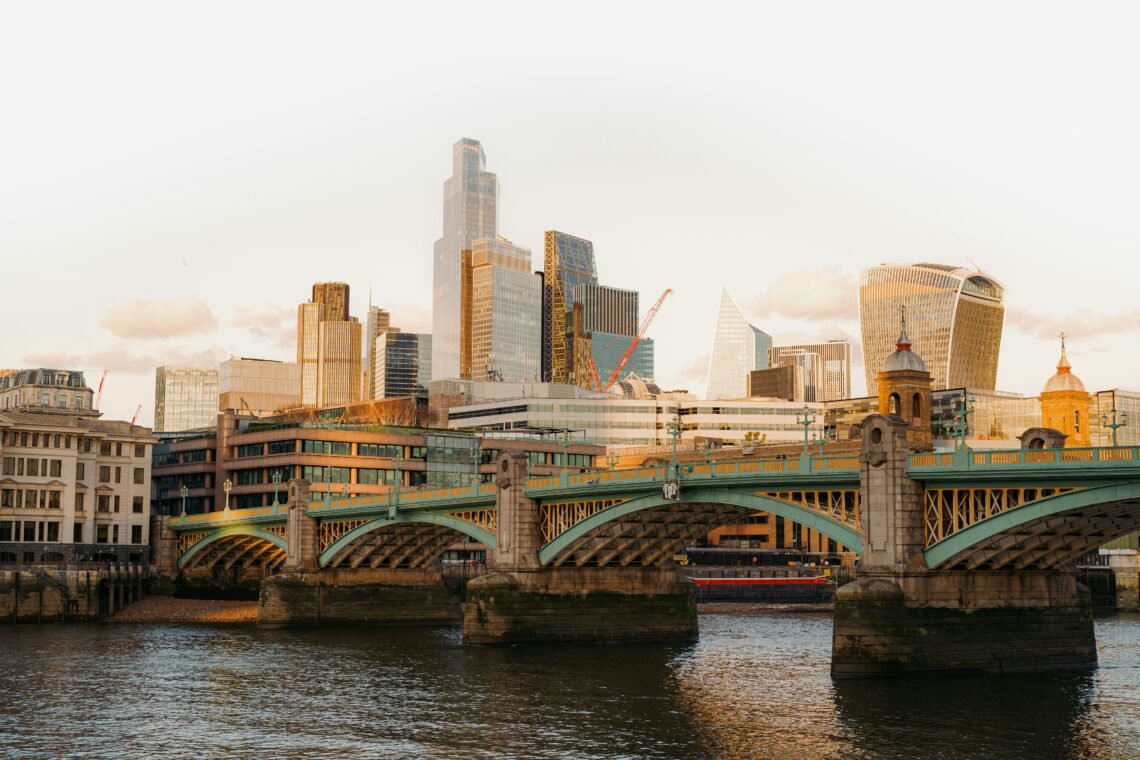
Cities, by contrast, were always ambivalent. They offered liberty but risked pride. From Babel to Babylon, the city has symbolised both human creativity and human hubris. It’s where cultures mix, where minds spark, but also where people forget who they are.
The city is the place where man meets man. The village is the place where man meets God.
Babel
In the biblical book of Genesis, Babel was not punished for architecture but for forgetting its limits. The tower was a monument to human autonomy, it was a place that no longer needed heaven. It’s funny how the Bible can predict what we’ll do every time.
Modern cities echo that same impulse. They are triumphs of efficiency, ambition, and light, yet, spiritually, they often feel weightless; a skyline replaces a horizon. A thousand faces pass and one does not know any of them. The noise never stops, and in that endless hum, silence, the condition of the soul, becomes impossible.
In the 20th century, writers like T. S. Eliot, Kierkegaard and Simone Weil described urban life as a kind of spiritual drought: motion without pilgrimage, communication without communion.
The city, they observed, is full of energy but starved of stillness.
Neuroscience has since caught up. As I explored in a previous article on this theme, cities over-activate the amygdala, the brain’s threat detector. The result is vigilance without rest. But spiritual life requires the opposite: quiet, rhythm, and attention. You cannot pray when you are scanning for danger.
That is why urban spirituality often becomes abstract: ethical, ideological, or performative. People seek transcendence through movements, protests, or art; beautiful to some, but often restless. The city breeds collective intensity, not contemplative depth. It gives us solidarity, but rarely serenity.
Monastery
The countryside teaches a different theology. It has rhythm, not rush; continuity, not chaos. The natural world sets a tempo that slows the mind and opens the heart.
Monastic life emerged in rural silence for a reason. The Benedictine rule of ora et labora (pray and work) reflected the natural harmony between cultivation and contemplation. Work on the land ordered the day; prayer ordered the soul. The very structure of monastic time with the bells, the seasons, and the shared table mirrored the moral order of creation.
The village is not a monastery, but it carries fragments of that order. It is intimate, repetitive, interdependent. Death and birth are visible. Labour has continuity. Life happens in a circle, not a sprawl. It sets a complete contrast to modernity, where birth and death do not have much meaning and labour is endless. In a modern city, life isn’t a circle, it’s a never ending trending line going up.
To live close to nature is to be reminded of one’s smallness, and paradoxically, that is what enlarges the soul.
The Psalmist said, “Be still, and know that I am God.” The city teaches movement; the field teaches stillness.
Canopy
Sociologist Peter Berger once described religion as a sacred canopy; a shared meaning that shelters people from chaos. In modern cities, that canopy finds itself being thinned. Churches are closed, rituals vanished, and identity has become fluid. But the hunger for transcendence has not gone away; it has simply migrated.
In place of parish life, people now gather around what Charles Taylor called ‘substitutes for fullness’: yoga studios, creative spaces, even political movements. These become forms of secular liturgy, attempts to create belonging and purpose in a world stripped of cosmic meaning.
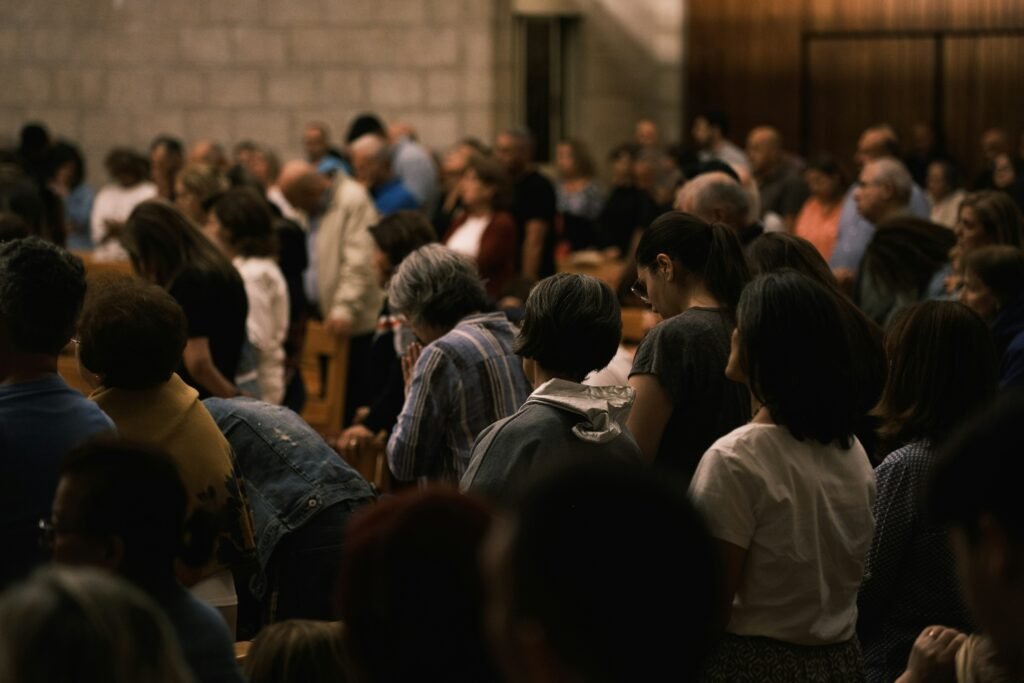
Yet these new rituals rarely last, because they lack rootedness. The village faith may have been narrow, but it endured. It tied people to history, to ancestry, to the dead and the unborn. The modern city, by contrast, ties people only to the present and the present is a thin place to live.
Awe
Psychologists have recently begun studying what theologians once called the numinous; the sense of reverent smallness before something vast. Research by Dacher Keltner and others shows that moments of awe reduce ego, increase generosity, and strengthen communal bonds.
Where do people feel awe? In nature, in music, in silence. One could imagine that it would be rare to experience such things in traffic. Urban life can simulate awe through spectacle, like the skyline, the concert, or a protest but it seldom produces the humility of true transcendence. The rural landscape, by contrast, invites awe quietly. A sunrise does not shout, it simply rises.
This is why so many of Britain’s poets like Wordsworth, Clare, Hardy, Thomas wrote about the countryside not just as scenery, but as a sanctuary. They understood what neuroscience now confirms: that attention is the root of reverence. And attention needs quiet.
Re-enchanting
To recover the spiritual life of Britain, we do not need to flee to monasteries. We need to learn again how to build environments that allow contemplation — in cities and villages alike.
This means designing for silence: gardens, chapels, libraries, parks. It means ritualising the ordinary: market days, shared meals, civic feasts. It means reclaiming time: Sabbath hours, festivals, collective rest.
The goal is not to glorify the past. It is restoration.
The village can remain a place of continuity without becoming parochial; the city can regain its soul without ceasing to innovate.
But both must rediscover the spiritual grammar of place and the awareness that matter and meaning are not separate.
Even before a nation stops believing in God, it stops believing that the land itself has purpose.
Balance
If the city is Babel and the village a monastery, then Britain’s renewal depends on reconciling the two. The city must learn reverence; the village must learn openness. The city must rediscover rest; the village must rediscover imagination.
A modern civilisation needs both: the restless energy of the urban and the rooted peace of the rural. The danger comes when one forgets the other.
Perhaps that is what the moral geography of Britain is really about, it’s not choosing between progress and tradition, but remembering that both are spiritual conditions. The good city must become more human; the good village must become more open. Only then can either be holy.
Lesson
Every field, every street, every river once carried a story. Some still do. To rebuild the moral and spiritual life of this country, we must rebuild our relationship with place, not as consumers nor residents, but as stewards.
The land itself is not secular. It waits to be re-enchanted. And when we remember that, we might find that the renewal of Britain begins not in Westminster or Whitehall, but in the quiet corners of parish churches, gardens, and kitchen tables; in the rediscovery of silence, gratitude, and awe.
Cities can build wealth, but only places build souls.
This is a slightly abridged and edited version of an article which was first published on Aaron’s Substack The Good Nation, where you will find numerous other stimulating articles. This is the third part of a three-part series. See above in the article for part two. Click here for part one. This article is re-published in Adamah Media with the author’s permission.

Aaron Britton
Aaron is a Man of Kent with a keen interest in philosophy, faith, and purpose. His writings reflect that. He is currently employed as a kombucha brewer but will begin training with the armed forces in January. He thoroughly believes curiosity is a great value and his job history tends to reflect that.

