India’s youth crises
Young Indians need a more convincing motivation than economic prosperity if this great nation is to continue to thrive, argues Joseph Evans.
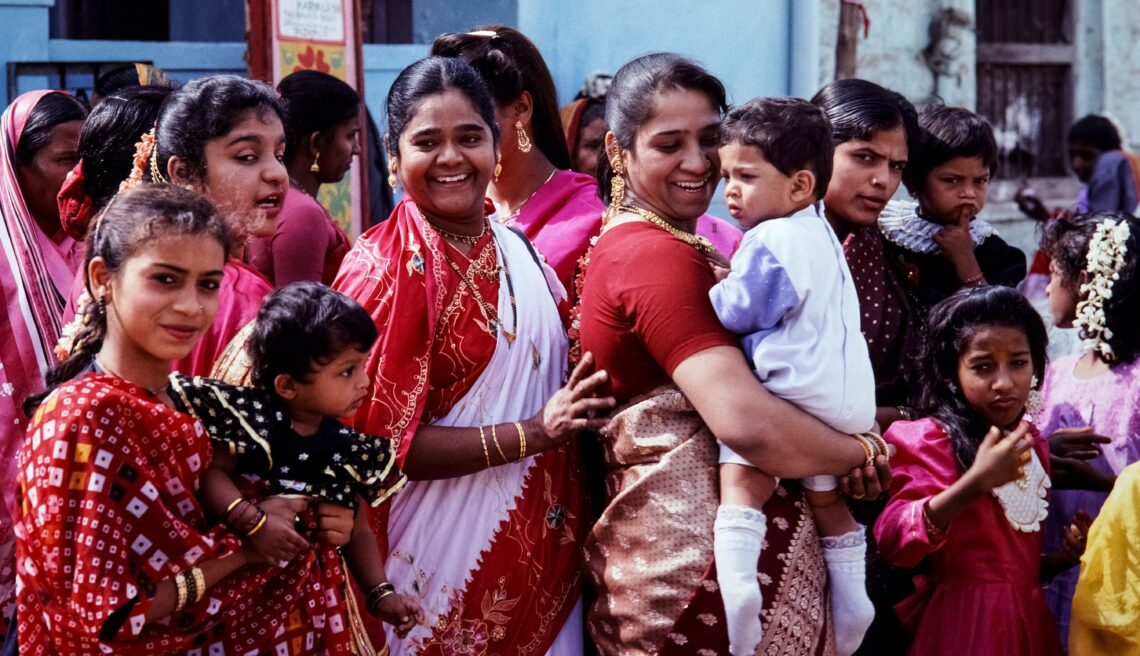
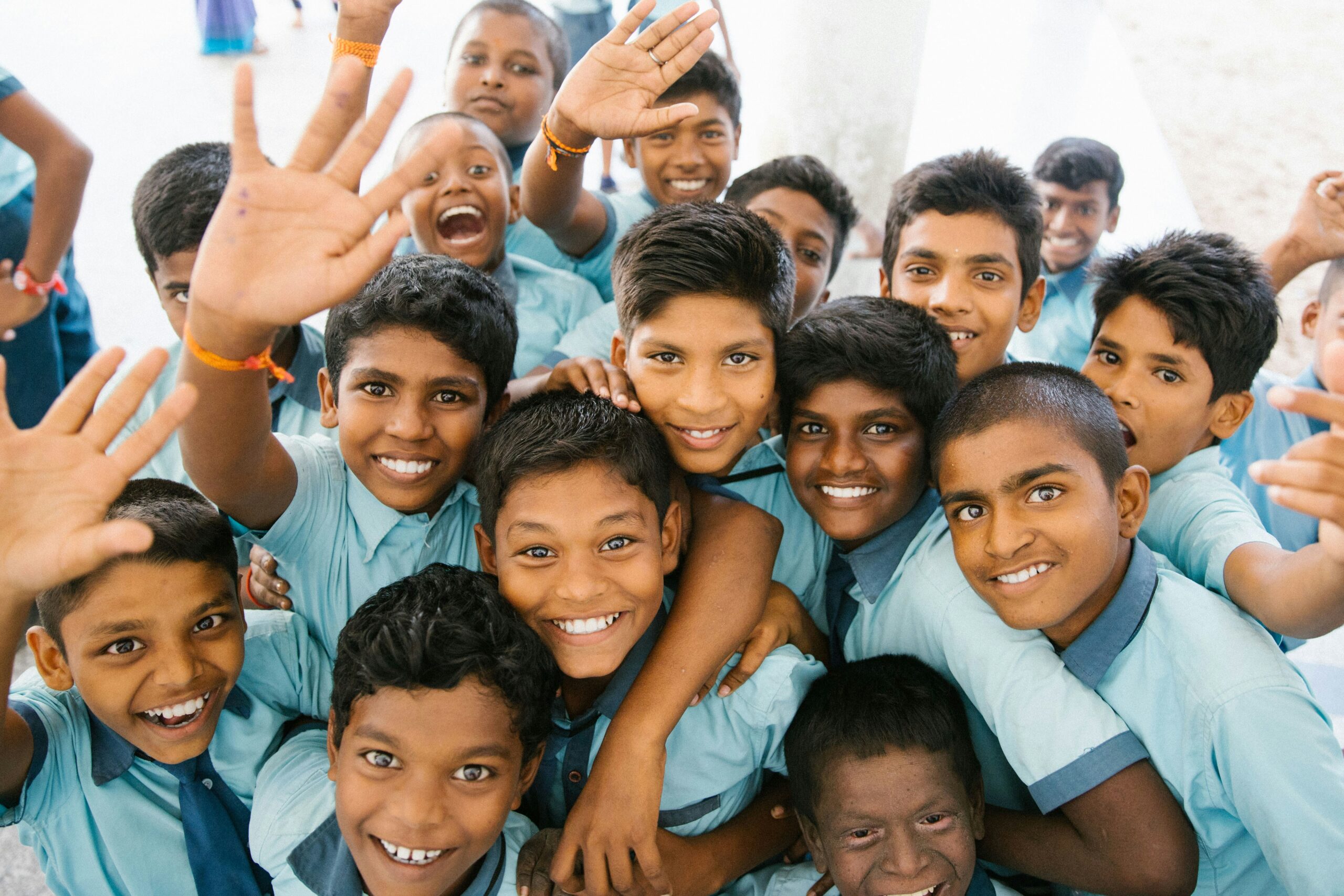
Walking around New Delhi, as I have been doing these days, I see a lot of youth. Young adults abound and seem confident and assertive. Air-conditioned malls offer them a plethora of opportunities to hang out and shop. There’s even a booming café culture, so young Indians can buy over-priced coffees just as their European and North American counterparts do. If that’s not coming of age, I don’t know what is!

And Indian youth are flexing their political muscles too. The recent student protests – called the Cockroach movement – are evidence of this. This movement started as a spontaneous reaction to comments by India’s chief justice Surya Kant who allegedly used this derogatory term to describe unemployed young people. The insult was then turned on its head when Abhijeet Dipke created a Twitter group as an act of satire for ‘cockroaches’ to come together. And this set in motion the whole movement.
Now called The Cockroach Janta Party (CJP), it describes itself as an ‘independent satire and civic-engagement project that uses humour and creative storytelling to encourage public discussion’. The ‘party’ (though in fact it is at present more a movement) thus far has over two million members and some 25 million followers on Instagram.
The CJP then focussed its ire on the failure of the public examination system, and in particular the government’s abrupt cancellation of a major medical entrance exam, which had been sat by over two million students on May 12, after it seems that a very similar paper had been leaked and circulated online. But tragically the cancellation led a number of students to commit suicide.
Demonstration
When a demonstration – demanding exam reform, accountability for the leaks, and justice for students – took place on July 20 in New Delhi, police authorities responded in a heavy-handed way, using tear gas, batons and pellet guns, despite the generally peaceful behaviour of the students. The demonstrators achieved at least one of their objectives, the resignation of the country’s education minister, after Prime Minister Modi had attempted to assuage the demonstrators through a video message to them.
These protests may or may not have a lasting effect but what I am picking up in my conversations with people and through media articles is that Indian youth feel disaffected.
In an opinion piece in the Indian Express, Hari Bapuji and Pankhuri Agarwal speak of ‘Gen Z’s demands for fair economic opportunity and better governance’. Speaking from a business point of view, the authors argue that ‘institutional voids — corruption, nepotism, weak governance — raise the cost of doing business and erode performance … Gen Z’s demands are, in a sense, asking businesses to help fix the very frictions that hold them back’.
While corruption in India is most certainly not something invented by its 21st century governments, there is a sense that young adults now are more sensitive to the issue because they feel it is clipping their wings.
Cronyism is still rife and, when they see unqualified people in positions of authority, the youths resent that they are not rewarded for their work and talents. Furthermore, salaries continue to be low in comparison with other major economic powers and young adults seem tired of working long hours for little money.
As Bajupi and Agarwal explain, “labelled lazy and entitled” (hence the Cockroach insult), “Gen Z has pushed back with ‘quiet quitting’, ‘acting your wage’, and ‘bare minimum Mondays’”. In other words, don’t expect us to work so hard, if you are going to pay us so badly.
The authors also call for businesses to ‘partner with educational institutions’ to help redesign India’s public examination system ‘around creativity and problem-solving rather than rote memorisation’. Instead of fact cramming, India’s educated youth now want to think more creatively.
On the very same day the Bajupi-Agarwal article was published (8th August), and on the same page in the print edition, an article by Krishna Kumar was entitled, ‘Message from the young: We don’t feel at home’.
Kumar, a former director of India’s National Council of Educational Research and Training (NCERT) and author of a book entitled Thank you, Gandhi, pinpointed a number of factors leading to discontent among India’s youth. One of these is lack of meaningful employment. “Unstable and mostly meaningless” jobs, he says, “don’t build an identity – the feeling that this is what I do best.”
And he continues: “A large section of the educated young have no stable work lives, let alone a career.”
Indeed, he writes, “the race for career jobs is terrifyingly competitive” involving “cold, bone-chilling drills”.
He considers the growth in suicide as evidence of ‘intergenerational breakdown’, following a myth – shared by state and society – that ‘so long as the older people shared their stories with the young, continuity shall stay intact’.
For Kumar, the Delhi protest was “the anger of the ignored. It demonstrated that youth frustration is not merely a perception: it is real, and neither education nor economic policies have responded to it. Rather, education has contributed to the sharpening of youth discontent and has offered the means to express it.”
Education, yes, but also social media. Indeed, when State-sponsored media initially tried to ignore the demonstration, they did not count on the power of social media, as young people took to all their usual channels to spread the word – very effectively – about their actions and demands.
Demography
But when speaking of India’s youth crisis, there remains one crucial piece to add to the puzzle: the issue of demography.
Another Indian Express article, by Srinivas Goli and K S James, informs us that ‘the average [Indian] woman is having about two children over her lifetime’. Or, in other words, ‘India has reached replacement-level fertility’. They then qualify this to say it is only true ‘in one sense’ and speak throughout the article of ‘near’ or ‘below replacement levels’.
And they point to a paradox: “India has achieved below-level replacement fertility despite the near universality of marriage.” This is indeed surprising because marriage normally gives the secure structure in which spouses are ready to have children. Indeed, in some Western countries the breakdown of the family structure has contributed in no small measure to the decline in fertility.
The authors also point to the discrepancy between ‘wanted fertility rate’ (the children women want to have, which, they claim, is a family size of around 1.6) and the number they actually have, which is around 2.0, implying a significant number of unplanned pregnancies. Son preference is also a contributing factor, the authors explain: a woman who has had one or two girls might want another child hoping it is a boy.
The authors’ principal point is a call for further action to reduce unwanted pregnancies and, to this end, they note with concern ‘the recent decline in the use of modern contraceptive methods’. Their paramount recommendation is for couples ‘to realize their own choices instead of overall birth rates’.
While this concern for couples to make their own free choices is admirable, and I fully share it, perhaps Goli and James are missing something. And one only has to walk around New Delhi to see it.
What strikes one is that while there are numerous young adults in sight, giving the impression that India’s capital is young and vibrant, children stand out for their absence.
I am not saying there are no children, there are. But in a country with a population of almost one and a half billion, it is surprising that in its capital children seem to have such a low profile. It won’t be that long before the Gen Z and Millennial young adults reach middle age and then who will replace them? Indeed, in another Indian Express article, Goli himself tells us that ‘India is getting old before getting rich’.
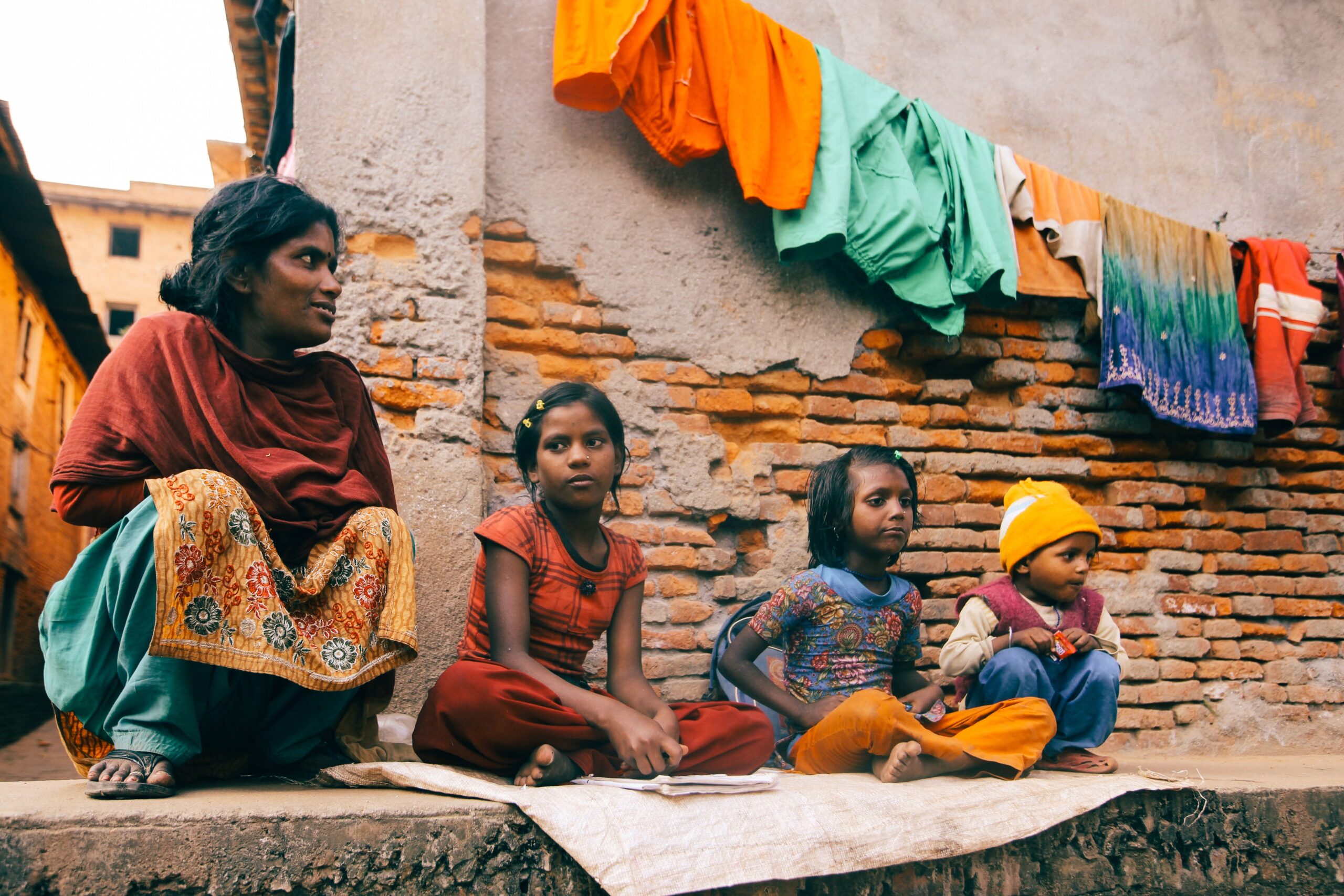
I am told there are more children in rural (and usually poorer) areas but it would be a tragedy that bearing children is only associated with poverty. And this perhaps takes us back to some of the concerns expressed by authors above about the current malaise of Indian young adults.
What is the root of India’s youth crisis? More than a specific concern about employment opportunities or exam injustice; more even than discontent over corruption in public life (because, after all, when hasn’t there been corruption?), the real question at stake might be what is behind India’s quest for prosperity and whether – whatever this is – it is sustainable.
Myth
As India grows economically, it needs hope and what we could call a national myth. For history shows that every nation needs a convincing story to inspire its growth.
The British colonial project, for all the greed and ruthlessness which accompanied it, had such a myth. With their Protestant view of the world, precisely protesting against the Catholic popes they had rejected and the Catholic nations they fought against, the British believed themselves mandated by God to civilize the world through Anglican Christianity.
America today shares something of that myth as the phrase ‘God bless America’ blithely falls from the lips of US politicians of whatever stripe. American capitalism, they believe, responds to God’s will.
The Japanese likewise had their own myth to inspire and justify their own brutal take-over of whole swathes of Asia during the Second World War.
Of course, India is a land of many myths and profound expressions of faith. When I began this article, many devotees were celebrating Kanwar Yatra, a feast which involves fetching water from the Ganges, with – as far as I can tell – as much noise and fanfare as possible, an expression of the importance this sacred river has in Indian life.
I am not qualified to discuss the possible power these myths might have to inspire Indian national life, especially when large sections of the population, particularly Muslims and Sikhs, do not share them – though I note that some political parties do try to define India along nationalistic Hindu lines.
I would simply suggest that a nation as great as India needs to rediscover a greater hope than that merely of economic prosperity.
From its founding constitution, India sees itself as a free, pluralistic and democratic State. And this might be a more healthy ‘myth’ to inspire the nation’s growth and ongoing development: India as an inclusive, tolerant society where all can bring their gifts and insights to help this nation flourish and where differences of faith and thought can be respectfully discussed to reach a new synthesis.
The great Jewish thinker Rabbi Jonathan Sacks (1948-2020) made the point that it is often religious families which have more children, because – in a world with so many threats and problems – one needs faith and trust in God to bring new lives into their world.
The respect for the freedom of couples should indeed be of primary concern, but that freedom can be informed. I notice in Europe how ever more educated faith-inspired parents are forming large families because they understand the beauty of doing so and are ready, freely and consciously, to face the sacrifices involved.
India needs children to have hope and hope needs a motivation. No exclusive nationalistic agenda will foster hope – Hitler’s National Socialism tried it and it didn’t work.
Public policy
True education will help couples see the value and beauty of having children – inspired often by their religious faith, whatever that might be – but this must be accompanied by policies which support them for doing so.
Government reform, as necessary as it is, cannot reduce young adults to selfish consumers.
Public policy – working together with religious groups, who often in fact have more influence on people’s attitudes and behaviour than political parties – should inspire and encourage the nation’s young to be ready to face the demanding but beautiful challenge of parenthood.
Wise policies might then encourage educated people, who tend to be higher wage earners and therefore more able to bear the financial demands of child rearing, to have more children, who can then grow up to add to the nation’s social capital (and do so already simply for being children). But for this, companies should adopt such policies as a flexible approach to working from home, build child creches, and ultimately incentivize rather than penalize parents who are highly educated.
And those same enlightened policies will find ways to support poorer people, who, for their resilience, hard work, indomitable spirit and popular wisdom, are also a key contributor to the good of the nation, to have the children they would like to have but at present feel unable to accept.
And yes, as the above authors argued, young people need to believe they will find opportunities to express themselves and use their talents for their own fulfilment and the good of society, also as parents.
Young adults will continue to be frustrated if the only motivations offered them are economic prosperity and individual choice. They need a narrative to inspire them to work for the common good, in which India is truly presented as a land of opportunity for all, whatever their religion; where all can work together freely; where human life at all its stages is nurtured and valued; where family life and children are cherished; and where corruption is punished and rooted out.
Because, one sees it in the West and some other Asian nations, the demographic winter so many countries are facing is a profoundly sad state of affairs and not something I would wish for India. Yet India still has time to avoid it, to be the great nation it is called to be, if it remains open to children while valuing the elderly, is genuinely inclusive of all faiths and legitimate approaches, and fosters the social conditions by which young people really feel they can play a role in the nation’s growth, both in their professional and family lives.

Joseph Evans
Fr Joseph Evans is a Catholic priest and a member of Opus Dei. He has worked as a journalist and youth worker, and is currently a university chaplain in Oxford. He is co-founder and Editorial Director of Adamah Media and a poet. His most recent work, “When God Hides”, was published by SLG Press in 2025.

