How the wrong answer helps me to get it right
Monica Sharp reflects on watching carefully, speaking sloppy Italian, and writing from the room she’s in.
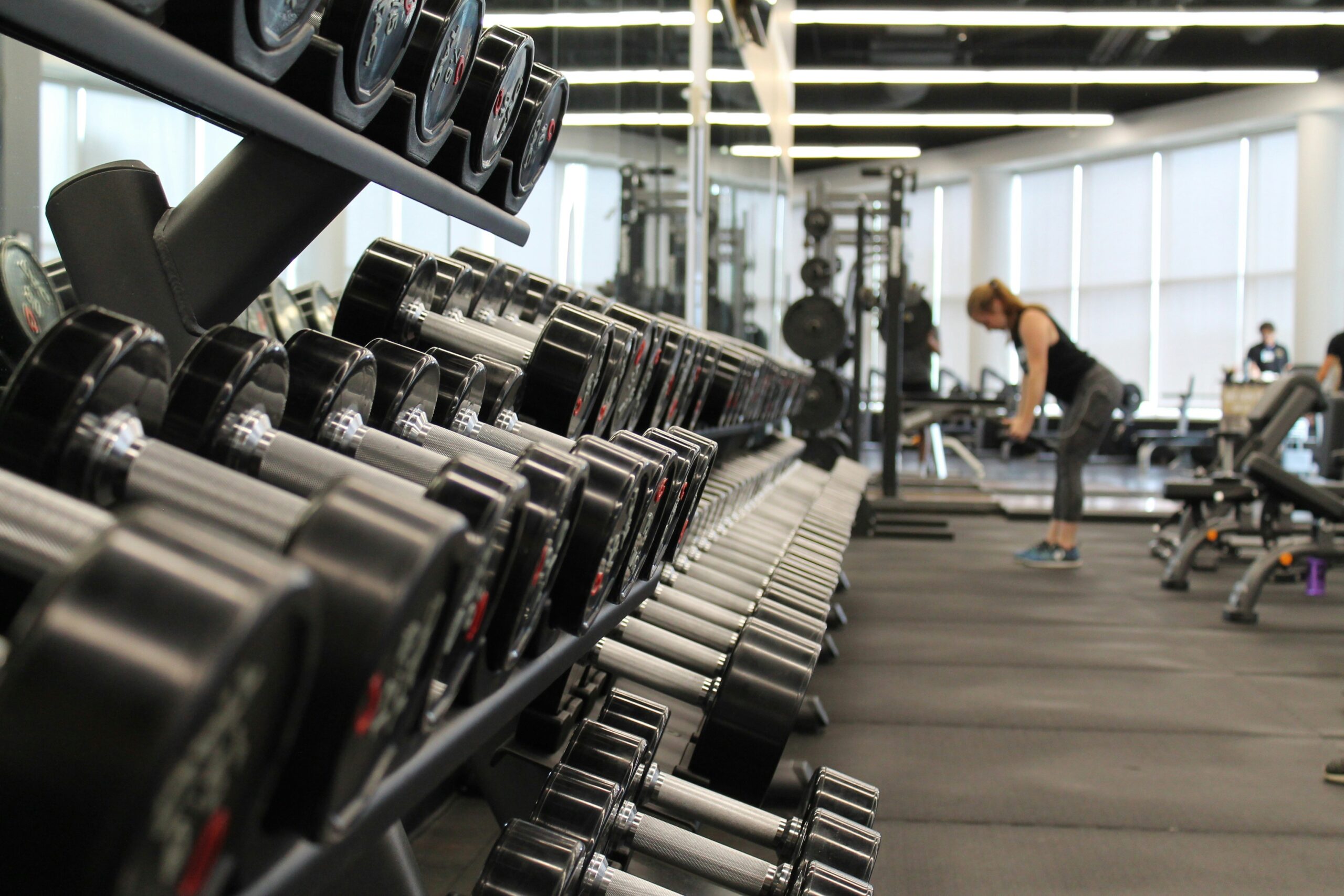
The gym is a latter-day confession booth. People tell me a lot of things.
I have one of those faces (open, friendly, curious) that seems to broadcast come, tell me about your life, I won’t judge you. Well, I might, a little. But I’ll do it with affection.
The characters I meet at my gym in Florence have become, over the years, some of the most consistent people in my life. They will never read my work. They don’t know me. They have no idea.
My gym is an American franchise, which means it sits in the Florentine cityscape with the incongruity of a McDonald’s near a medieval tower.
And yet it has become, for me, something like Cheers, that much-loved primetime comedy so popular in America in the eighties.
I have a persona in the gym. She is consistent, warm, more extroverted than usual in Italian, even as her Italian occasionally produces the wrong answer, and she loves the Friday morning playlist with an enthusiasm that requires no translation.
I’ve been a member at this gym for almost three years, and over two years ago I made a commitment to work out five to six times a week. Pilates on odd days, cardio on even days, with a Saturday wild card. Always in the morning, and always to the point of a good sweat.
The husband is a large, stiff man I’d privately clocked as a retired high school coach: the flushing face of someone who believes suffering is the point. He struggles through the most basic Pilates poses and radiates a low-level sovereignty over his mat and its surrounding airspace.
He objects to noise. He objects to cell phones. Once, when a woman’s phone rang mid-class, the morning her father had fallen and was in the hospital, he yelled at her because she was interrupting his concentration.
There’s the man at reception whose buongiorno, ciao bella, arrives every morning with the reliability and pitch of a cartoon theme song.
Next comes Mr. Stinky: lean and ripped in the way of an Outward Bound instructor or a rock climber, middle-aged, here every single day for workouts of a length and intensity that have led me to fear, quietly, whatever demon he’s outpacing. (Work out his moniker for yourself.)
And there’s the quietly ebullient, in-control Italian whom I take to be the franchise owner, though I’ve never confirmed it, and whose tireless encouragement of my Italian (and my workouts) feels genuinely, improbably kind.
Then there’s also the retired wife of a dentist who confided that a foot fetishist cornered her on the train to Empoli, wanting to get closer to her toes. “I always wear light nail polish, so they never look chipped or scratched,” she clarified.
This spring two sets of American exchange students began attending the Monday and Friday classes, visibly outperforming everyone in the room, including the Italians who have been coming for years.
When two blond girls who looked freshly cast in a Barbie sequel showed up one morning, the Italian grandmother who usually stands in the back row with minimal effort turned to me mid-plank with a look of theatrical confusion. Ma dai. I had to agree.
But last week something happened. An Italian woman I’ve seen before was speaking in the locker room with a younger woman whose Italian was hesitant. English, I assumed. Then, it emerged, Turkish-English.
My first instinct was mild irritation, the involuntary response to overhearing a conversation in broken fragments of three languages before coffee. But they turned to me, curious and kind, and soon we three began to chat.
Within five minutes I was pulling out my newest copies of Open Doors Review and Pure Slush to show them my essays, one published in both English and Italian, another about London. I felt the specific, unguarded joy of being unexpectedly seen.

Many writers are haunted by the large difficult project, the hard one that ‘matters’, that deserves the good hours.
The daily essay, the Substack post, the observation scribbled on a receipt: these feel frivolous by comparison, and certainly less serious than the work that announces itself.
I am trying to let go of that hierarchy.
Writing from everyday life is, for me, like painting wet on wet into paint that hasn’t dried.
Here the colors bleed into each other and the outcome is both intentional and partly accidental, shaped by both instinct and plan. The result is alive, unforced.
The gym gives me that. Florence gives me that. Moving through a language that I am working to make my own gives me that: the slight delay, the small wrongness, the moment of being perceived.
At this age, having moved through pregnancies and injuries and whole chapters of stillness, any day I can move, I move. The body is grateful. As it turns out, so is the work.
The gym teaches me, once more, that it is not only okay, it is good to make mistakes, to get it wrong now and again. It is good to accept the limitations of my body and the limitations of my language, because it is precisely from within those limitations that I most authentically connect with people.
And now I think of it, that is precisely what confession is for, and my experience in the gym has helped me see how it can make sense.
But here, more than the private reckoning of the individual booth, I have in mind a more general form: the one said together, out loud, in everyday life, in a room full of people who are frequently also getting it wrong.
We acknowledge our faults, we turn toward each other and toward God, and that admission becomes the connection. The gym, it turns out, has been teaching me the same thing all along.
This is a slightly edited version of an article which first appeared on Monica’s Substack Sharp Monica. For other stimulating articles by her, click here. This article is re-published in Adamah Media with her permission.
Monica Sharp
Monica lives and works in Florence, Italy. Her international spirit travels with an American passport but she's long since lost count of all the relevant metrics. She currently moonlights as a legal researcher for a local law firm, and prior to that, pursued careers in international education and software. Her off-hours in Italy are filled with a creative buffet of writing, art, music, reading, parenting, and more. Monica frequently writes about cultural forays, interpretive adventures, and close observation.

