The unseen battle: the hidden story behind disability
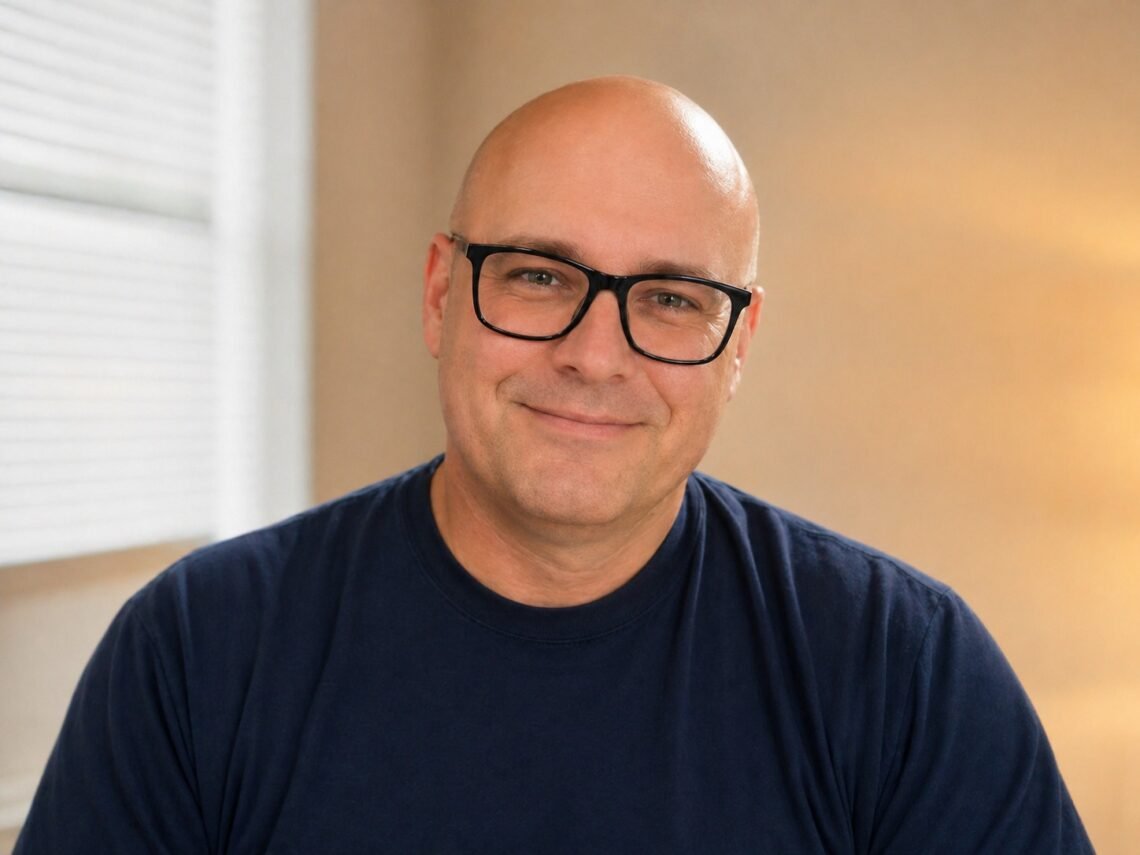
Simplistic notions of ‘recovery’ do not tell the whole story about the struggle to overcome disability, argues stroke victim Douglas Vandergraph.
A photograph can show a person standing again after a stroke. It cannot show what it took to reach that moment, or what it will take to stand tomorrow. And it cannot tell us anything about the worth of someone who may never stand at all, whose life continues to be supremely valuable even if they cannot return to physical ability.
Yet we all like a happy ending and we are drawn to the photograph because it offers us just that, a recognizable conclusion: suffering, effort, triumph. But the most consequential parts of life after a stroke seldom happen when a camera arrives. They unfold in the long, unremarkable hours when nobody is watching, when the future is uncertain, and when another person’s patience matters more than applause.
In March 1992, I suffered a stroke that paralysed my left side. I had to relearn how to walk and how to use my arm. Those are plain sentences for experiences that changed the shape of my life. I do not wish to over-dramatize this because the drama is not what I most want people to understand.
Indeed, the real drama is in what people do not see: the extraordinary ongoing struggle to keep concentrating on recovery, the sheer time and effort this can take. I have also come to see that the difficulty is not only a matter of what a body can do. It is shaped by the pace people expect, the assumptions they make, and whether they are ready to make room for a different way of living.
We like stories with a clean dividing line: the day before the stroke and the day after the comeback. Such stories can be genuinely hopeful. They can also encourage us to mistake a milestone for a conclusion.
Recovery is not necessarily a return to a former life, nor is it the measure of a life well lived.
It may be learning to live a meaningful life with limitations that remain and overcoming societal barriers to achieve this.
More than three decades after my stroke, I cannot honestly describe every difficulty as something left behind. Some come from the lasting effects of the stroke. Others arise when everyday systems assume that everyone moves, works or communicates in the same way. Those are different kinds of barriers, and they deserve different responses. I do not say this to invite pity. I say it because the truth is less tidy than the inspiring version.
There is a subtle burden in being treated as an example of courage. The praise may be sincere, but it can become another expectation: keep improving, keep smiling, keep proving that your struggle has a satisfying moral.
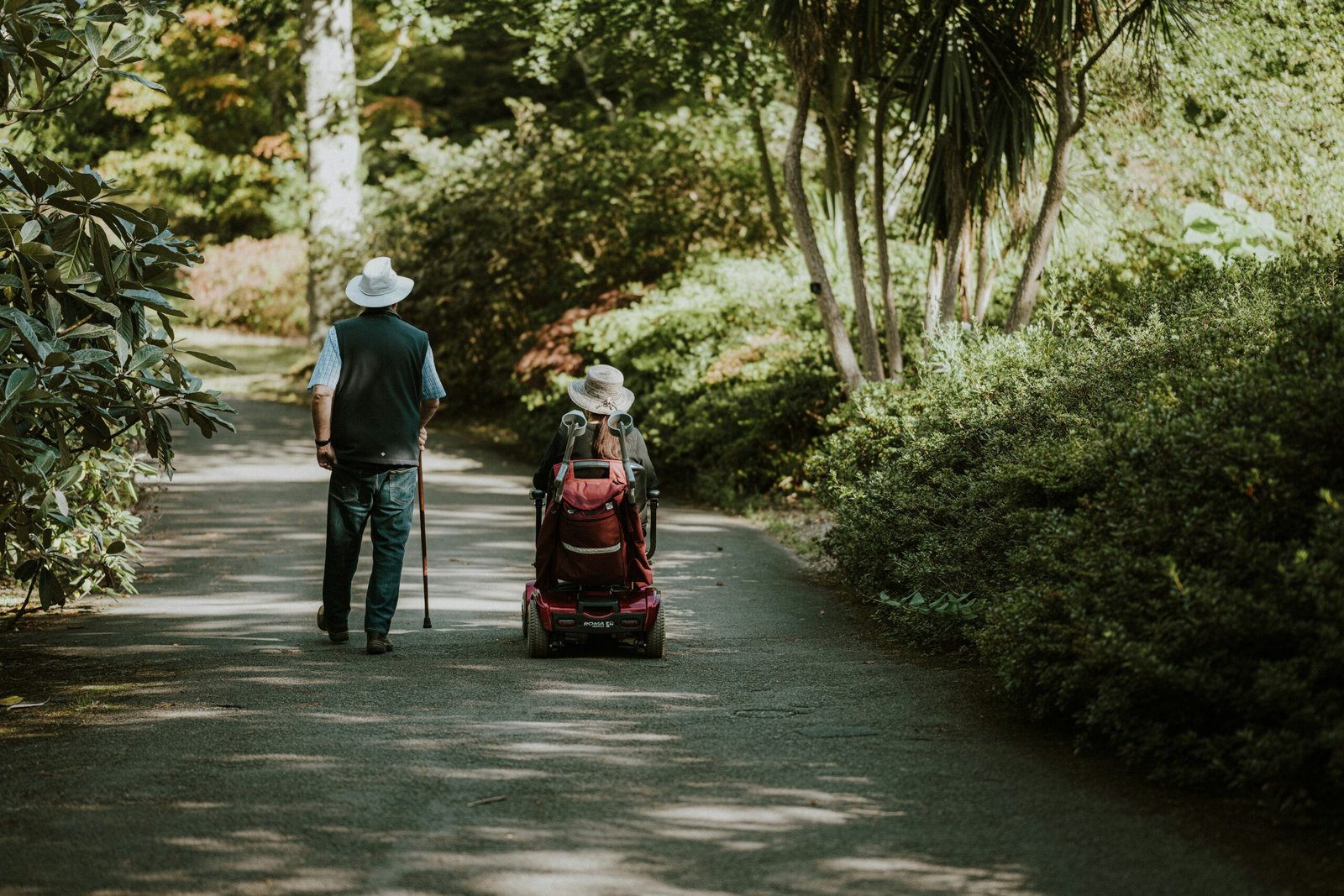
A person’s value cannot sensibly depend on visible progress. That is true whether the person is recovering from a stroke, living with a disability from birth, caring for someone else, growing older, experiencing grief, or managing a condition that strangers cannot see. These experiences are not interchangeable, and I would not presume to speak for everyone who lives them. But they expose a common question:
can we make room for a human life that refuses to fit the timetable we have assigned it?
All sorts of people or institutions can face this question, and might answer it better or worse. Families face this question when support is needed for years rather than weeks. A clinic might offer a defective answer by giving important instructions in a format a patient cannot use. So might an employer when a rigid schedule matters more than whether someone can do the work well with a reasonable adjustment.
Digital culture, which all too easily confuses a person’s worth with the attention they can attract, also faces this question. For let’s be honest, how many people are attracted by someone with a disability?
This all shows that the question demands practical choices, which could greatly test and potentially undermine a disabled person’s determination.
Our social media age favours visibility over hidden grit and so can all too easily ignore the unseen battle of recovery. I now spend much of my time writing and speaking about Christianity online. The reach of that work is a gift, but public platforms also tempt us to measure what matters by what can be counted. A video can be watched, shared and praised. The private decision to try a difficult task one more time cannot be measured so neatly. Neither can the care of a family member who gives yet another evening, or the understanding of a colleague who chooses not to hurry someone. But those hidden acts may contain more humanity than anything that trends.
For me, this conviction has a distinctly Christian foundation. In Luke 14, Jesus tells a host not to limit an invitation to those who can repay it. He speaks of welcoming people who are poor or excluded, including disabled people. It is a difficult teaching because it asks us to examine more than our generosity. It asks why we arrange our tables, our relationships and our communities around those who can return the favour, affirm our importance, or make us feel successful.
The point, as I understand it, is not that disabled people exist to teach the comfortable a lesson in charity.
That would simply make them useful to someone else’s spiritual story. Nor is the aim to reduce a person to an object of kindness. Jesus’ challenge is directed at the host: change the way you see, and change whom you make room for.
But making room is only the beginning. A guest is also a neighbour with choices, a contribution to make, also when they are disabled, and a voice. A community becomes more welcoming when its members listen to one another and all can share in deciding what that community should be.
A reader who does not share my Christian faith may understand the source of this belief differently. I welcome that difference. We do not have to agree about God to recognize that a human being is not a productivity figure, a lesson, a burden or a promising headline.
The practical test is the same. Do our values hold when meeting someone’s needs requires us to change a rule, a timetable or an assumption, for perhaps it is not so much that disabled people are inconvenient but rather that we are inconvenienced by them? Do they hold when a person’s story does not offer us an inspiring ending?
It is easy to say that everyone deserves respect. It is harder to make respect visible in the design of ordinary life.
Does a meeting allow someone enough time to speak? Can someone enter a public space without having to plead for basic access or reasonable adjustments? Can a person say they are not improving without being lectured on optimism? Do we ask what support is wanted instead of assuming we know? These are not glamorous questions, but they are often where dignity becomes concrete.
Independence does not always mean doing everything alone. Sometimes the right support is what makes independence, autonomy and participation possible. A kindness that refuses to listen can become another form of control. Real companionship asks us to remain present when there is nothing impressive to report and to respect another person’s decisions even when doing so takes longer.
We should be careful, too, about making resilience a substitute for justice. It is good to celebrate determination. It is not good to praise people for overcoming obstacles while leaving avoidable obstacles untouched.
Accessible buildings, clear information, usable technology, reliable transport, reasonable workplace adjustments and health services that listen are not sentimental extras. They are ways a community acknowledges that different bodies and circumstances belong to the same human world. Disabled people should help shape those decisions, not simply be told what others have chosen for them.
I am grateful for every genuine word of encouragement I have received. Encouragement can be life-giving. But I hope we can enlarge its meaning. Instead of asking only how someone found the strength to recover, perhaps we should ask what needs to change so that living with lasting effects is less lonely and less restricted.
And rather than answer that question on someone’s behalf, we should listen to the people whose daily lives are affected. Instead of searching for the perfect before-and-after photograph, perhaps we should notice the relationships and shared decisions that make another day possible.
The photograph of a person standing again may still deserve to be taken. Let it be a beginning, not a verdict. Let us honour the achievement without demanding that it resolve the whole drama. And when the cameras go away, may we have the character to stay: not as passive spectators expecting the disabled to earn their place at the table by becoming a simplistic success story, but as neighbours willing to share their story with them, with all its twists and turns.

Douglas Vandergraph
Douglas Vandergraph is a Christian writer and Bible teacher. He writes about faith, dignity, perseverance and ordinary life on his website: https://douglasvandergraph.com/

