Magnificent humanity in the age of artificial intelligence
“The future of AI is not solely about what machines become. It is about what human beings become alongside them”, argues Edward A. David after reading Pope Leo XIV’s new encyclical Magnifica humanitas.
Pope Leo XIV has just released his first encyclical, Magnifica humanitas, a document devoted not to a distant theological controversy, but to one of the defining questions of our age: what becomes of the human person in the time of artificial intelligence (AI)?
That question matters far beyond the Catholic Church. It matters in classrooms and offices, in hospitals and courts, in military laboratories and family homes. It matters whenever a student asks AI to write an essay, whenever a company automates a job function, whenever a teenager learns about the world through algorithms, or whenever a society tacitly decides that efficiency matters more than wisdom.
The encyclical arrives at a moment when AI is no longer a futuristic possibility. It has become part of the experience of ordinary life. Millions of people now interact daily with systems capable of writing poetry, summarising books, generating images, diagnosing diseases, composing music, analysing legal documents, and simulating conversation with astonishing credibility.
Much public discussion about AI swings between two extremes. On one side are the prophets of technological salvation who speak as though AI will inevitably solve humanity’s deepest problems. On the other are the prophets of doom with their apocalyptic warnings that intelligent machines will soon replace human beings altogether.
Pope Leo resists both instincts.
Magnifica humanitas is neither anti-technology nor naively optimistic. It instead asks a more fundamental question: what sort of people are we becoming through the technologies we create?
That shift in emphasis is important.
The central problem raised by AI is not merely whether machines can think. It is whether human beings will continue to think morally, responsibly, and humanely while surrounded by increasingly powerful systems.
New technology, ancient question
One reason the encyclical feels unexpectedly fresh is that it refuses to treat AI as an isolated technical issue. Pope Leo situates the rise of artificial intelligence within a much older human story: the temptation to confuse power with wisdom.
This concern runs through the history of modern technology. During the Industrial Revolution, societies discovered that machines could radically amplify human productivity. Factories transformed economies, but they also produced exploitation, dangerous labour conditions, and social fragmentation. Pope Leo deliberately echoes Pope Leo XIII’s famous 1891 encyclical Rerum novarum which responded to those upheavals by insisting that economic systems must serve human dignity rather than reduce people to instruments of production.
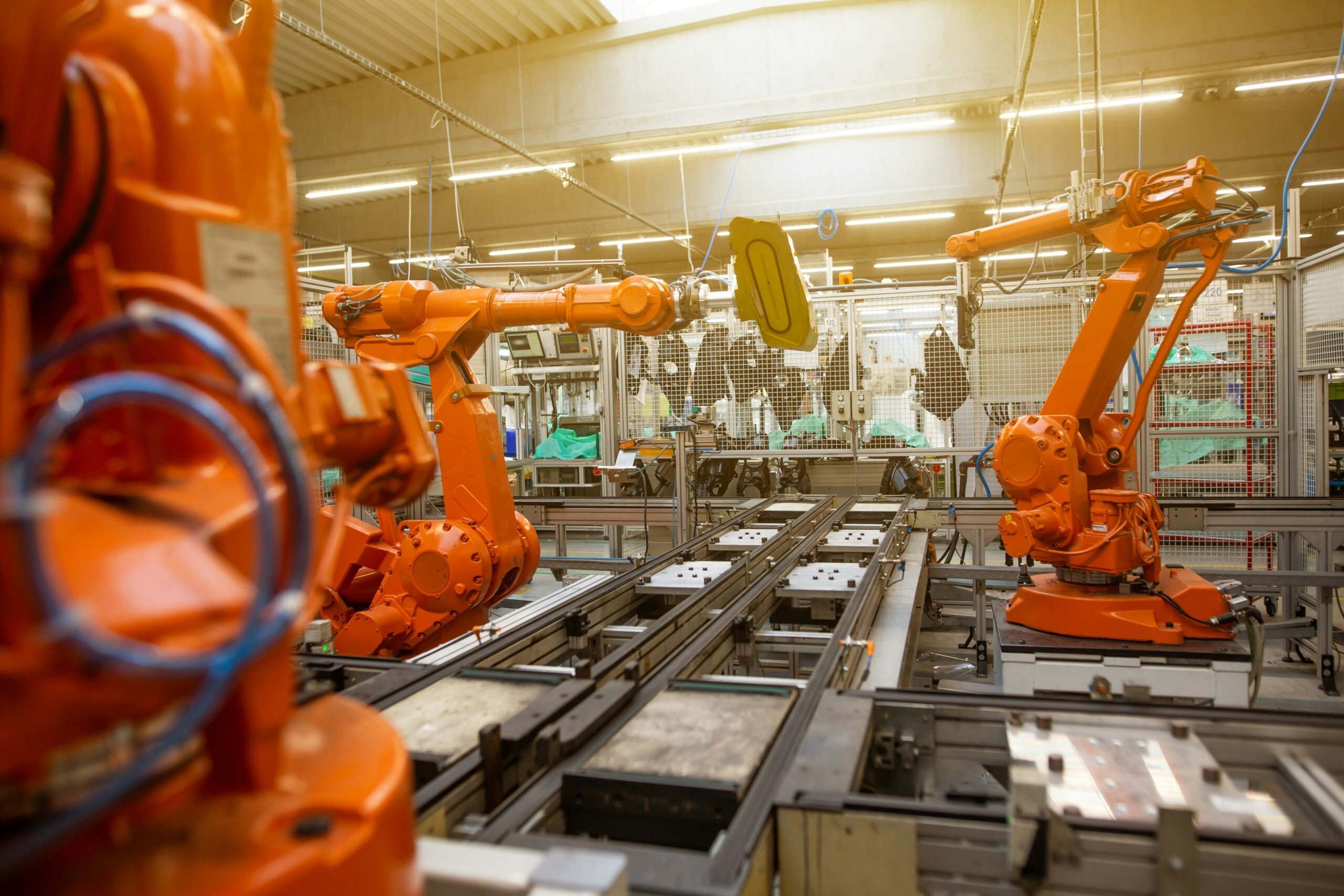
Today, artificial intelligence presents a similar challenge – though on a deeper level. Industrial machines transformed physical labour. AI increasingly touches intellectual labour, creativity, communication, judgement, and even relationships.
In other words, AI does not simply change what we do. It changes how we understand ourselves.
That is why so many current debates about AI feel deeply existential. We are not merely asking whether machines can perform tasks efficiently. We are asking what remains uniquely human once machines can imitate activities once associated with our intelligence, creativity, and expertise.
The anxiety surrounding AI is thus not irrational. It reflects an intuition that something more than economics is at stake.
Creativity, intelligence, and the human person
Last year, I wrote an academic essay exploring the relationship between creativity, artificial intelligence, and God. My argument was simple: creativity is not merely a technical category but a moral one.
This distinction matters because modern discussions of AI often reduce intelligence to performance. If a machine can generate a convincing painting, compose music, or produce elegant prose, we are tempted to conclude that human creativity itself has been replicated.
Yet creativity involves more than producing outputs.
A large language model can generate a sermon in seconds. It can imitate Shakespeare, summarise Augustine, or produce passable philosophical essays. But there remains an enormous difference between generating language and bearing responsibility for truth.
Human creativity emerges from lived experience, moral struggle, relationships, memory, suffering, love, failure, hope, accountability, and so on. A poem written by a grieving parent means something different from lines statistically assembled by an algorithm.
This is not because AI outputs are necessarily useless. Some are remarkably impressive and genuinely helpful. The point is subtler. Human creativity is connected to character.
When a teacher writes feedback on a student’s work, when a doctor carefully explains a diagnosis, when an artist labours over a painting for years, or when a friend sits with another in grief, something morally significant is taking place beyond mere information exchange.
Pope Leo’s encyclical repeatedly returns to this insight.
The danger is not simply that machines will become more capable. The danger is that human beings may begin to see themselves as machine-like.
Efficiency, optimisation, speed, and automation are valuable things within limits. But a civilisation organised entirely around optimisation eventually forgets how to recognise contemplation, patience, sacrifice, wonder, or love.
The crisis of attention
One of the most perceptive aspects of Magnifica humanitas is its concern with attention.
Artificial intelligence systems are developing within an economic ecosystem driven by engagement and data extraction. The more platforms understand human behaviour, the more effectively they can shape it.
This is already visible long before the arrival of advanced AI systems. Recommendation algorithms influence political discourse, emotional habits, shopping patterns, and even spiritual imagination. Social media does not merely reflect desires; it trains them.
Pope Leo warns that a society saturated with algorithmic mediation risks producing forms of passive dependence. People may gradually lose confidence in their own judgement. They may outsource thinking itself.
That concern is difficult to dismiss.
Already, students increasingly ask AI systems not only to assist their thinking but to replace it. Professionals use AI-generated summaries instead of reading original documents. People seek emotional reassurance from chatbots rather than from communities, friendships, or religious traditions.
Again, the issue is not that these tools are always harmful. The deeper concern is whether convenience slowly weakens the habits required for human flourishing.
Wisdom takes time. Moral judgement develops through practice. Relationships require vulnerability and patience. None of these fit comfortably within technological cultures built around an easily won efficiency.
The encyclical therefore asks a profoundly countercultural question: what practices help human beings remain fully human in a technological age?
Why the Church is speaking about AI
Some readers may wonder why a pope should comment on artificial intelligence at all.
Part of the answer is historical. Christianity has long engaged moments of technological and social transformation. The Church has addressed questions surrounding industrialisation, nuclear weapons, economic systems, biotechnology, ecology, and globalisation because such developments affect how human beings live together.
But there is also a specifically theological reason.
Christianity insists that human beings possess a dignity that cannot be reduced to usefulness, productivity, or computational power.
Human value is not earned through efficiency. That conviction becomes especially important in societies increasingly tempted to evaluate people according to metrics and measurable outputs.
Consider the elderly person with dementia who no longer contributes economically. Or the child with severe disabilities. Or the lonely neighbour who requires time, patience, and care. A civilisation shaped primarily by technological paradigms may quietly begin to view such lives as operational burdens.
The Christian tradition pushes firmly in the opposite direction. It argues that vulnerability is not evidence of worthlessness.
In fact, one striking feature of the Gospel narratives is that Jesus repeatedly directs attention toward those whom efficient societies overlook: the poor, the sick, children, widows, the socially marginalised.
Pope Leo’s concern is that technological cultures can subtly train societies to value persons instrumentally. Commercial optimisation begins to dominate moral imagination.
That is why the encyclical speaks so strongly about work, warfare, truth, and accountability. AI systems are not morally neutral once deployed within political and economic systems shaped by power.
An autonomous weapon system is not just a technical innovation. It changes the moral distance between action and consequence. A predictive algorithm used in hiring or policing is not merely a tool. It shapes opportunities, reputations, and lives. A generative AI capable of flooding the internet with misinformation does not distribute content. It destabilises public trust itself.
These are not speculative philosophical concerns anymore. They are present realities.
Recovering the art of questioning
One of the themes that interests me most in discussions of AI is the importance of questioning.
Large language models operate through prompts. Human beings ask; the system responds.
This apparently simple interaction contains an important moral insight: technology does not eliminate human agency; it intensifies the importance of it.
Thus, the quality of a prompt matters. The intentions of the user matter. The institutions shaping technological development matter. The values embedded within systems matter, too.
In biblical terms, wisdom is frequently associated not with possessing unlimited knowledge, but with learning how to discern well.
The Book of Genesis offers a clear warning. Adam and Eve encounter in the serpent something intelligent and persuasive, yet they fail to question what they are hearing.
Modern societies face a strangely similar temptation. We are surrounded by systems that appear astonishingly knowledgeable. Their fluency creates an aura of authority.
Yet fluency is not wisdom.
An AI model may produce persuasive falsehoods with complete confidence. It may reinforce biases hidden within training data. It may generate emotionally convincing but fundamentally empty responses.
The proper response is neither fear nor blind trust. It is discernment.
Pope Leo repeatedly calls for responsibility, transparency, and moral accountability because these are ultimately habits of judgement. They require citizens, educators, developers, religious leaders, and governments to be willing to ask difficult questions about what technologies are doing to persons and communities.
Unlike Adam and Eve, they must question before they bite.
Remaining human
Perhaps the most important contribution of Magnifica humanitas is that it reframes the conversation.
The future of AI is not solely about what machines become. It is about what human beings become alongside them.
This means the central challenge of the coming decades may not be technological capability but moral formation.
Will schools still teach students how to think deeply, or merely how to manage information efficiently? Will workplaces preserve space for human judgement, mentorship, and creativity, or gradually reduce workers to supervisors of automated systems?
Will religious communities offer practices of attention, contemplation, and embodied presence that resist digitally induced fragmentation? Will political institutions develop the courage to regulate technologies whose economic incentives often outpace ethical reflection?
These are fundamentally human questions.
The title Magnifica humanitas therefore carries an important claim. Humanity remains magnificent not because we are the fastest processors of information, but because human beings are capable of wisdom, love, responsibility, sacrifice, imagination, repentance, communion.
Artificial intelligence may become extraordinarily powerful. It may transform economies, education, medicine, and warfare. It may alter the structure of everyday life in ways we can barely predict.
But no algorithm can decide what kind of civilisation we wish to become.
That remains, for now at least, a profoundly human responsibility.
And perhaps that is the deeper insight beneath Pope Leo XIV’s encyclical. The ultimate question raised by artificial intelligence is not whether machines can become more like humans.
It is whether humans will remember how to remain human at all.

Edward A. David
Dr Edward A. David is the Director of the Associateship of King’s College and Lecturer in Ethics & Values at King’s College London. Most recently, he was the McDonald Postdoctoral Fellow in Christian Ethics & Public Life at Christ Church, Oxford. His current research spans business ethics, jurisprudence, and the sociology of religion. Edward also publishes in various fields of applied ethics, and is the author of A Christian Approach to Corporate Religious Liberty (2020), Leadership by Example (2025) and The Spiritual Narratives of Generation Z (2026). In addition to his academic work, Edward is a consultant to the Goldman Sachs 10,000 Small Businesses UK programme, and is a lead author of the Goldman Sachs 10,000 Women programme on Coursera. Edward holds a Bachelor of Music from New York University as well as an MSt and DPhil in Theology and Religion from the University of Oxford.

