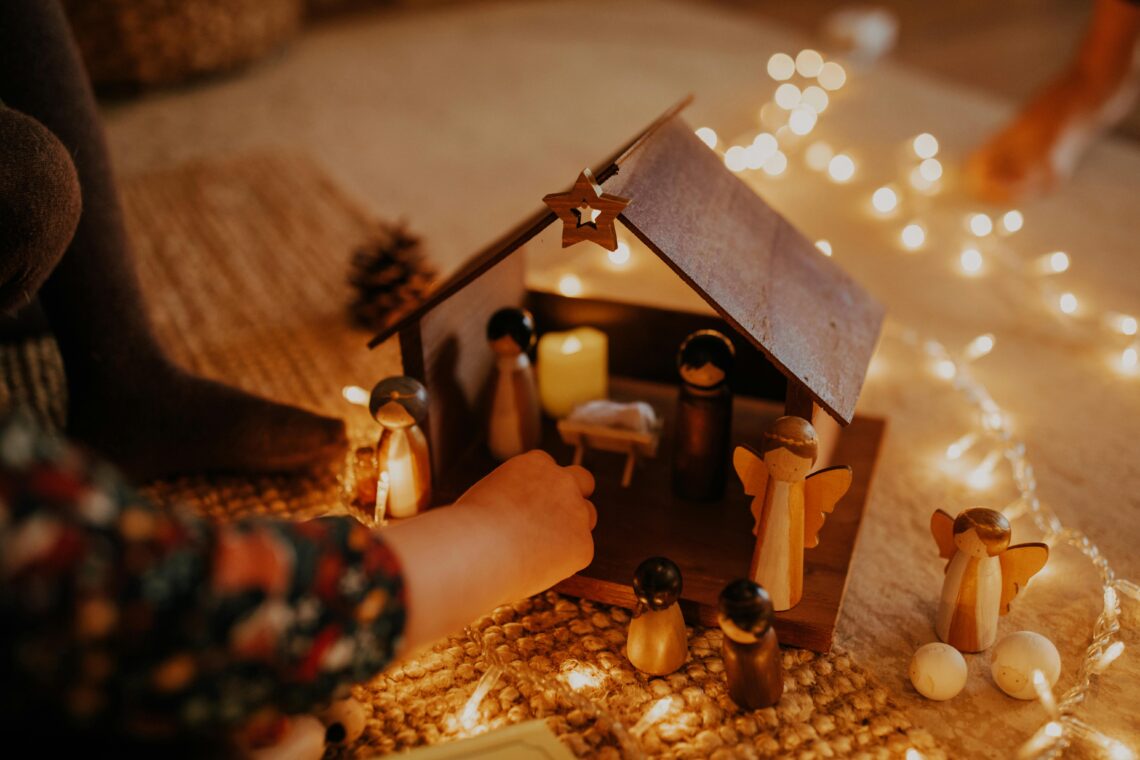
With Christ in Bethlehem through a blizzard, a motel room and a dog
Monica Sharp describes how, as a child, she and her family once had a little share in the nativity journey of the Holy Family.
Christmas is a season I have always met first through stories. Before I ever understood how holidays worked, before I knew that families invented their own rituals, their own comforts and chaos, I learned Christmas through the voices of other centuries.
Shakespeare offered revelry. Dickens showed mercy. Alcott gave me longing for a more just world. And somewhere in between, in a winter long ago, my own Christmas arrived through a blizzard, a motel room, and a mutt wedged into the backseat of a Volkswagen Beetle.
I’ve been thinking about those overlapping traditions, both lived and literary, because Christmas, more than any other holiday, stitches together the old (very, very old) stories with the new.
Shakespeare’s world made space for misrule and reconciliation. Dickens insisted that our hearts could be remade, if only we were clearly shown how. Alcott showed us that small, tender sacrifices mattered as much as grand transformations. And each December, we unwittingly rehearse those scripts.
My family wrote a version of that script in 1980 when I was a child, although at the time I did not see it that way.
I only knew what it felt like to sit in the backseat of a Volkswagen Beetlebug as my mother drove us, three children and one confused dog, north from Oklahoma to Michigan through days so short they seemed ashamed of themselves.
My father had gone ahead of us weeks before to start a new job. We followed in the fading light of December, driving straight into the teeth of winter. Let me take you through part of this seasonal story now.
Shakespeare’s Christmas: The Bleak Midwinter
Shakespeare teaches us that winter holidays are inconveniently emotional. In Twelfth Night, the Tudor lord of misrule turns the world upside down. Masters become servants, mourners become lovers, and strangers become family.
The traditional Twelfth Night season was a time of reversals and public permission for chaos. A time when the rules bent a little, when you could be foolish or disguised or unguarded.
Twelfth Night’s carnival logic is hard at work when the sober steward Malvolio dreams of power, dresses against his nature in yellow cross-garters, and becomes the emblem of holiday disorder turned mercilessly comic. Beware all those who take this life too seriously!
I do find it Shakespearean to uproot a young family in mid-December during the holidays, leaving behind a warm, known world for a new one. There is something of Viola in this narrative, arriving shipwrecked on the Illyrian shore, blinking into an unfamiliar landscape.
Our own ‘ship’ that Christmas sailed on high seas indeed. We drove for days. The roads were coated in a thin veneer of ice.
Black ice, my mother muttered, gripping the steering wheel as though she could throttle the weather into submission.
Fortunately, she grew up in the Upper Peninsula of Michigan and could drive through any winter condition with nerves of steel. Our dog George panted anxiously in the backseat and fogged the windows with each breath as he warmed our legs. My brothers and I tried not to cry even though we were scared.
Shakespeare understood that holiday stories begin in disarray. Before the feast comes the stumbling. Before the joy, the uncertainty. Before the hearth, the cold.
Dickens’s Christmas: Room for Grace
If Shakespeare gives us misrule, Dickens gives us moral weather. His Christmases come with fog, frost, soot, and longing, all conditions that must be survived before the miracle can occur. In A Christmas Carol, redemption comes only after Scrooge faces the darkness of his own memory and the chill of his own loneliness.
Our own Dickensian moment came not in a London countinghouse but at a Days Inn. My father had been living there for weeks in a long-term hotel room that smelled of stale cigarette smoke and industrial carpeting.
When we arrived, after days of ice and snowstorms and the world shrinking to the two red taillights ahead of us, we sat with wonder on the small sofa. We had made it. We had George. We had some Christmas presents.
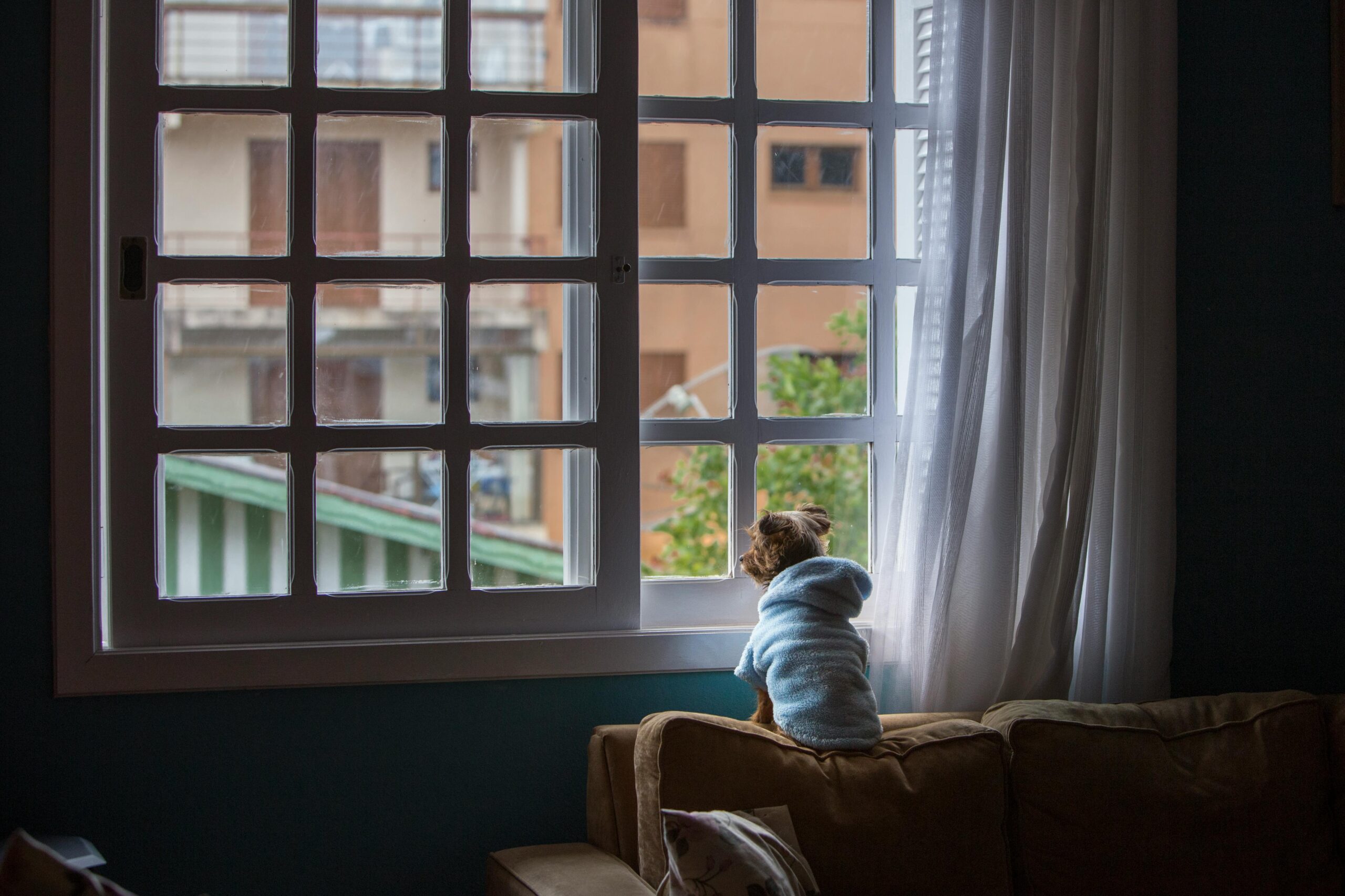
The whole journey felt touched with that Dickensian blend of displacement and hope. We were in between and in transit, yet determined to find our way toward the new home.
Dickens believed that families reveal themselves most clearly in hardship. That money and comfort might fail (and often do), but generosity and tenderness can kindle a flame, even in the bleak midwinter. In that hotel room, cramped and smoky and strange, our crowded family created its own radiance.
Alcott’s Christmas: The Education of the Heart
Louisa May Alcott’s Christmases are gentler than those of Dickens yet equally profound. In Little Women, the March sisters give up their holiday breakfast for a family in greater need. Their generosity becomes a lesson in courage and compassion. Christmas, in Alcott’s hands, becomes a practical classroom for the heart.
My mother understood this. She was exhausted from driving for days through the snow, navigating icy roads with three small children and a dog, and she still tried to make Christmas, any Christmas, possible.
She got quiet when the room felt too small to hold all five of us plus George, who did not understand what had happened to his backyard. But she quickly rose to the challenge.
For Alcott teaches also that to make a home can be an act of imagination rather than geography.
In those winter days, when nothing was settled and everything smelled like stale smoke, we envisioned our spacious new home where we’d soon unpack our Bekins boxes.
Christmas Eve: The Turning Point
We finally received the keys to our new house on Christmas Eve. It was still snowing on the shores of Lake Michigan, the thick, enchanted kind that swirls down through the lamplight and drifts at the curbs, leaving hollows around trees.
The house high on a hill was echoingly empty, and so, so cold. We explored its bare rooms: here, the living room; here, the kitchen; here, a small bedroom with a slanted ceiling where I would sleep after our furniture arrived in the moving van.
I stood outside in the driveway, holding an enormous snow shovel with numb hands. Then, a moment that has always stayed with me. My mother stepped out of the house and walked toward me through the quiet snowfall. The lamps were glowing along the driveway. The evergreen trees soared high above our heads. “Merry Christmas, princess,” she said.
Was I a princess? Hardly. My feet were wet, I didn’t know where I was, my life was up in the air, and we were going back to the Days Inn for the night. I would start classes in a strange new school after the new year.
Yet in that instant, I felt crowned. Not with a tiara, but tenderness.
The kind that Alcott bestowed upon her heroines, the kind Dickens gave to his redeemed Scrooge, the kind with which Shakespeare endowed characters who, after storms and disguises and misrule, finally found their way home.
The Stories We Carry
As adults we often reach for Christmas in the form of tradition, candles, cookies, familiar carols. But underneath those rituals lie older stories. The Shakespearean chaos that precedes celebration. The Dickensian struggle that precedes generosity. The Alcott-style moral awakening that teaches us what it means to love one another.
Beneath all of that lies our own blessed mythology.
This is what literature does for us. It prepares us for our own lives while we read, none the wiser in the moment. Centuries before I sat in that VW Bug, Shakespeare was writing about winter madness, Dickens was sketching out his visions of transformation, and Alcott was crafting her lessons in quiet resilience. They created a vocabulary for experiences that I would not have words for until much later.
The Gift
Christmas 1980 stays in my memory as a journey through hardship. A liminal space in a motel room. A new house glimpsed through snow. My mother’s kind words, full of hope, in the cold. A moment that held misrule, mercy, and moral weather all at once.
Now, when Christmas approaches, these memories return. The swirl of snow under streetlamps. The smell of that hotel room, our family piled in with our patient dog. The comfort in a sticky handful of Christmas chocolates. The ancient feeling of a family in transit for reasons beyond their control. The exhilaration of opening a new life chapter in a bleak yet magical midwinter.
Every family on the move for uncertain reasons, in an uncertain climate of war, scarcity, or upheaval, becomes in some quiet way a holy family.
Like Mary and Joseph, migrating families travel not because the road is clear, but because remaining has become impossible.
They gather what they can carry, protect what they love most, and step into the dark guided by trust rather than certainty. Above them shines a star that they hope shimmers with promise. The destination does not guarantee safety or arrival. It simply calls them forward.
The star speaks of God’s nearness in motion, of Christ found among those who must flee, of faith practiced on foot. It tells of new opportunity, new hope, and new belief born not from comfort, but from courage.
And so they move on, trusting that the God who once took flesh on the road still walks with every family seeking shelter, dignity, and home.
Christmas asks us to remember, to gather our stories together. It always urges us to create meaning.
And this year, I find myself grateful. For hope. For faith. For new beginnings. For reading. For Shakespeare’s revelry, Dickens’s redemption, Alcott’s gentleness, and that still greater story of the Holy Family in Bethlehem. And for that long-ago winter evening when despite everything, and for a fleeting moment, I felt that I was a Christmas princess in a house without furniture.
Like what you’ve read? Consider supporting the work of Adamah by making a donation and help us keep exploring life’s big (and not so big) issues!

Monica Sharp
Monica lives and works in Florence, Italy. Her international spirit travels with an American passport but she's long since lost count of all the relevant metrics. She currently moonlights as a legal researcher for a local law firm, and prior to that, pursued careers in international education and software. Her off-hours in Italy are filled with a creative buffet of writing, art, music, reading, parenting, and more. Monica frequently writes about cultural forays, interpretive adventures, and close observation.


One Comment
Lisa
Fantastic writing Monica! I loved this from beginning to end. ❤️