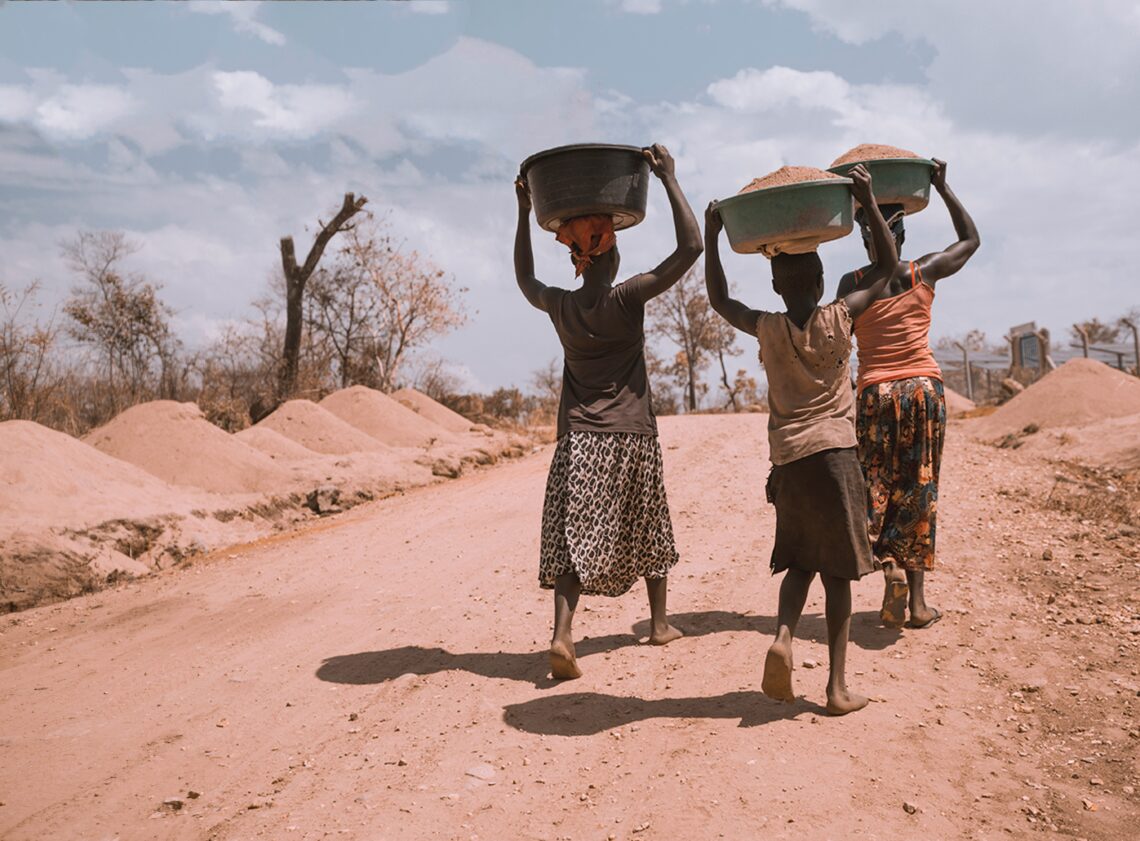
The feminisation of pain in Africa
Ana María Gutiérrez is a doctor, nun and theologian. After several decades working in Africa, in this article she shares her experience accompanying women who live with pain and suffering.
As a doctor, I have been treating African women in my practice for many years. Every day, I witness a type of pain that is very characteristic in Africa and that we are often called upon to accompany. It is linked to the female condition. I call it the feminisation of pain, and it has very peculiar characteristics. I will refer to it with some specific examples:
Sterility
Infertility, whether in men or women, is socially viewed as the woman’s fault. A woman who cannot have children is a woman who is insulted, mistreated, and publicly shamed by her in-laws or even her own family.
It is a reason for rejection and abandonment by her husband, or worse, sometimes the husband brings home a second woman without warning her. She must endure unwanted polygamy through which her husband seeks to have offspring. All this without any dialogue or decision-making power.
The pain of widows
The economic and social exclusion of widows is a complex and uneven problem that manifests itself in different regions of the African continent.
The situation of widows in Africa is often marked by a series of prejudices deeply rooted in traditions, social norms and legal systems.
These women, faced with the loss of their spouse, are often deprived of rights, access to resources and opportunities, exposing them to greater vulnerability and considerable difficulties in meeting their needs and those of their families. Some are relatively young, which can condemn them to many years of widowhood.
After the death of her spouse, a woman is likely to experience degrading practices, whether psychological or physical. She may be forced to have sexual relations with other family members, suffer physical violence and public flogging. Other customs include making them drink water from the body where their husband has been washed or shaving their heads.
In certain regions, for example in certain tribes in Kenya, the ancient practice of levirate marriage forces widows to marry one of their late husband’s brothers in order to continue farming the land. He may take over her inheritance and come to live with her: thus, one in two African widows remarries a relative of her late husband.
Some widows face an even more difficult fate, especially if they resist it. They are then marginalised, threatened with forced sexual relations, deprived of any inheritance, and sometimes even expelled from the village. If this occurs in a context of conflict, women must then support their families alone, sometimes in a refugee camp.
In the Democratic Republic of Congo, 50% of women are widows. Some are also victims of rape and susceptible to contracting the Human Immunodeficiency Virus (HIV). All these factors contribute to the feminisation of poverty.
We can imagine how much pain lies behind these situations: physical, psychological and social pain, the pain of violated human rights, the pain of inequality, the pain of seeing your own property taken away from you.
The women we see in our clinics tell us about all this pain, and we must take it into account because, often, the illnesses they present are the bodily manifestation of so much pain endured, manifesting itself in lower back pain, gastritis, arthritis, headaches, hypertension, etc.
Perinatal grief
A type of grief we pay no attention to in Africa, and which often makes me feel very uncomfortable, is the grief of a pregnant woman who gives birth to a stillborn child, or a woman who is diagnosed with intrauterine death.
At the hospital where I currently work, the medical director does not allow us to inform the woman that the foetus is dead before delivery because, according to him, the woman begins to grieve and does not push or cooperate with the contractions to deliver the baby. As the person who performs the ultrasounds, I often tell the woman that the baby is suffering, that the situation is not good, in order to prepare her in some way.
Afterwards, the woman faces her grief alone, with no one to take care of her feelings about the loss of her child, whether it was stillborn or died after delivery.
These are situations in which there is a lot of silence and the woman has to deal with her feelings alone, or worse, she is sometimes accused of witchcraft and of having evil spirits that caused the baby’s death.
There is a lot of silenced pain in these situations.
Sexual violence
Sadly, I see many cases of sexual violence against girls in my practice. This violence usually occurs within the family environment and is often silenced, so that, in addition to the pain of the rape, there is the added pain of feeling that the parents have not defended them, or that the adults knew but kept quiet and did nothing.
Rape is also common, whether through night-time burglaries or assaults in public taxis, which culminate in the rape of the victims in a vacant lot, sometimes by several attackers.
Violence reflects the fragility of the social fabric and the sense of belonging to a community or tribe, as girls who have been victims of rape are often subsequently rejected by their own close circle.
Child mortality
Another pain I face every day is seeing a child die due to lack of financial resources. How many deaths do we see that are preventable! Children who die from anaemia, malaria, respiratory or intestinal infections, simply because they did not see a doctor sooner.
The pain on the faces of mothers watching their children die is indescribable. It is a pain that stays with us healthcare workers in low-income countries and causes us great pain as well, because we feel so helpless.
Failure to recognise women’s dignity
Women are sometimes viewed as objects. In most cases, they must be available to their husbands for whatever he wants, wherever he wants and however he wants.
Women have no say in the family. In most cases, it is the men who make the decisions, although there are always exceptions.
Types of suffering
The suffering of African women can take many forms.
The first type of pain we doctors must address is physical pain, but it is not the most important.
In Africa, especially in cases of chronic illness, there is a great deal of pain: advanced AIDS, sickle cell anaemia, tuberculosis, poorly controlled diabetes, cancer, natural disasters and conflicts. This pain may be physical, but above all, there is a general sense of suffering from a variety of sources.
–Physical pain. Often, due to lack of resources or mistaken beliefs, a great deal of pain is endured. In my clinical practice, I always say that ‘pain is not to be endured, it is to be fought’.
–Refractory symptoms. In chronic diseases or palliative care, there are symptoms which are very difficult to control: nausea, vomiting, anorexia, asthenia, neuropathic pain. As they cannot be eliminated, they cause suffering.
–Economic suffering. The sick person is unable to work and is a burden on the family. Often there is no money to pay for lifelong treatment (diabetes, hypertension), leading to serious complications such as diabetic coma or stroke.
–Psychological suffering. At the end of life, the person feels their death approaching, expressing it with rejection, anger, depression, sadness, or aggression. Added to this is the fear of witchcraft and the accusations suffered by many patients, which plunges them into greater pain.
–Spiritual suffering. Faced with seriousness, the vital question arises: “What have I done with my life?” For believers, the image of God, the fear of judgement and the desire for sacraments weigh heavily. There is also the pain of not having reconciled with close family members, which the illness sometimes allows them to do.
–Social isolation. People with chronic illnesses with sequelae live in isolation and suffer a ‘social death’. Some patients with suppurating pathologies are isolated even in their own homes.
This is a translation of an article which first appeared in the Spanish online magazine Omnes. For the original article, click here.
Like what you’ve read? Consider supporting the work of Adamah by making a donation and help us keep exploring life’s big (and not so big) issues!

Ana María Gutiérrez
Ana María Gutiérrez is a religious of the Esclavas del Sagrado Corazón de Jesús (Handmaids of the Sacred Heart of Jesus), a doctor and a theologian.

