
Seeking refuge, deprived of dignity: Burmese nationals in Thailand
Other global conflicts should not make us ignore the plight of Burmese refugees in Thailand as they flee war and persecution, argues Laura Naw.
Drive down the Thai border where it meets Burma and you cannot fail to spot some of the enormous refugee camps, almost bamboo cities, which sprawl along it. For many Burmese, this is as far as they get into Thailand.
In recent decades, huge numbers of Burmese nationals have sought refuge and protection from their south-eastern neighbor. Some were displaced by the relentless civil war, while others have been driven by economic necessity. There are also those, now many, born in the refugee camps.
Given their undocumented status in Thailand, they live under the constant threat of harassment, arrest and forced deportation. Their lack of formal documentation limits their access to decent work, healthcare, education and social services, thereby perpetuating a cycle of vulnerability and marginalization.
This problem is not Thailand’s alone but should concern the entire ASEAN as it highlights the challenges faced by the bloc to deliver a unified and effective response to the complex political and humanitarian problems affecting its member states.
Thailand should rethink its policy, allowing Burmese nationals to access legal residency, work, healthcare, and education.
Likewise, law enforcement officers engaging in bribery and other forms of misconduct should be investigated and held accountable.
Deprived of dignity
Even after spending decades in camps, refugees along the Burma-Thailand border were not allowed to work or travel freely beyond camps. Since their movement is restricted, they rely heavily on humanitarian aid for basic needs such as food, water, medicine, sanitary products and clothes.
Humanitarian organizations play a vital role in supporting displaced communities along the Burma-Thailand border. But foreign aid reductions under the Trump administration – along with funding shortfalls from other donors – have severely impacted the entire region. The Border Consortium, for example, ceased most of its food assistance programs. Meanwhile, the International Rescue Committee stopped providing primary healthcare across the nine refugee camps.
According to the Refugee Camp population report of July 2025 compiled by the Border Consortium, there were a total of 107,476 refugees across all nine camps.

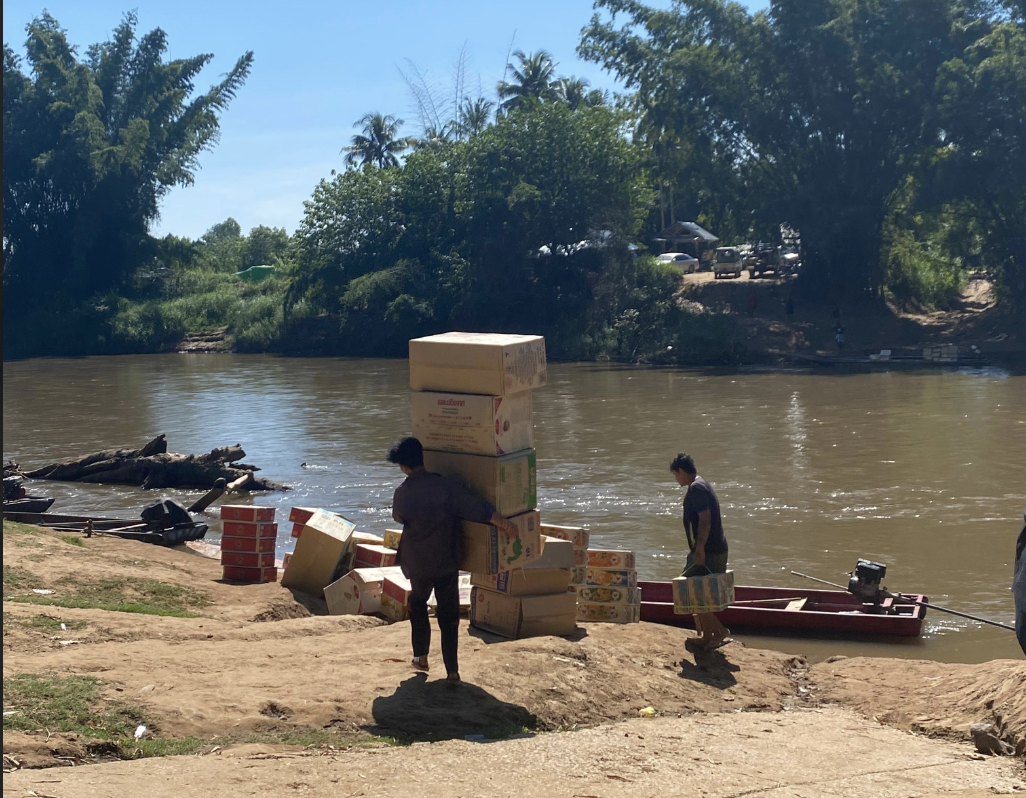
While generations have grown up in the camps, born into a life where they’ve known nothing else, the living conditions in these places have worsened in recent years. The Burmese living in them continue to live in small huts with bamboo walls and floors and roofs made of leaves, lacking electricity and water.
And perhaps even worse than the living conditions, as bad as they are, is the lack of prospect and the sheer waste of human energy and talent.
Young people in particular are forced to spend their time sitting around or playing foot-volleyball for want of anything better to do.
Following the end of international humanitarian aid, community-based organizations submitted a request to the Thai government in July 2025 to allow refugees living in camps along the border to work legally.
On 26 August 2025, the Thai Government took a historic step by allowing long-staying Myanmar refugees to work legally in Thailand – enabling them to support themselves, contribute to local economies and boost the country’s long-term growth. The step has been taken to address labor shortages amid the Cambodia-Thailand conflict.
But Thailand, while offering a degree of shelter, is not a signatory to the United Nations Convention and Protocol on Refugees. As a result, it does not provide official refugee status and legal protection to those fleeing conflict in Burma.
To this day, the mass deportations of Burmese nationals – including children and other vulnerable individuals – persists, often occurring without any assessment of the risks they face upon deportation. In June 2025 alone, Thai authorities deported 229 Burmese nationals in two separate operations.
Some deportees – especially men of conscription age – have been detained by military authorities upon their return. Others have reportedly been retrieved by their families, but only if they could pay bribes. One deportee reported that his family was willing to pay eight million kyats (approx. USD 1,800) to secure his release. But junta officers insist that military service is every citizen’s duty.
Those trying to support the refugees also face major hurdles. International, regional, and national organizations are increasingly unable to meet the rising demands for protection and emergency assistance for Burmese human rights defenders living in Thailand. The need for support far exceeds the available resources. This leaves many defenders in a state of uncertainty and anxiety, potentially disrupting their invaluable human rights work.
Extortion
Located in western Thailand, Mae Sot serves as a crucial gateway for many people from Burma, especially those from conflict-affected areas.
But Thai police in this town often randomly stop Burmese nationals for interrogation or to inspect their documents and even personal devices. If someone is unable to provide sufficient information, they may be taken to the police station. The police might well demand bribes in exchange for one’s release.
Human Rights Watch found that Thai police routinely stop and extort Burmese nationals, threatening arrest and detention unless bribes are paid. For low-income migrants, such bribes may eat up their entire salary. In Mae Sot, officials reportedly refer to Burmese migrants as ‘walking ATMs’.
Thai security personnel have even established a semi-formal extortion system, selling unofficial ‘police cards’ to migrants to shield them from arrest. Migrants typically pay around 300 baht (USD 9) per month to a broker. If detained, they contact brokers to secure their release. Those who cannot pay often live in hiding to avoid police encounters.
Challenges
Due to their uncertain legal status and lack of formal protections, displaced Burmese nationals living in Thailand are highly vulnerable to exploitation. Because of language barriers, fear of dealing with Thai authorities and lack of proper documentation, many rely on brokers to find work and housing – arrangements that often lead to deception or abuse.
Migrant workers frequently face withheld wages, extremely low pay and unsafe working conditions, especially in factories and the fishing industry wherein oversight is minimal.
To obtain work permits in Thailand – known as ‘pink cards’ – many migrant workers seek employer sponsorship through brokers. However, many have since struggled financially as broker fees have soared, often surpassing their monthly income. The Human Rights Watch found that in all the cases in which they examined the cards, the employer names listed in them were fabricated by brokers.
Given the difficulties in finding jobs, some prefer to start their own small businesses. But the police retain the power to raid and close such businesses for any alleged irregularities. Only after paying the penalty or bribe are businesses allowed to operate, perpetuating a cycle of extortion.
Some find work with non-governmental organizations but recent funding cuts have limited such opportunities.
Without legal documentation, Burmese nationals who were once engineers, doctors, or other skilled workers cannot find jobs in Thailand.
They are also unable to continue their education, thereby impacting their ability to support their families.
For some, such difficulties have forced them to return to Burma, deciding to join armed groups as a way to contribute to efforts for change.
No access to education
Migrant children – whether arriving or born in Thailand – cannot easily access the Thai public school system.

As a result, many migrant workers choose to enroll their children in ‘learning centers’, which are non-formal educational institutions that serve children and youth – including migrants, refugees, and the stateless – from Burma. They provide lessons in Burmese and offer migrant children a safe space.
Learning centers are run on a voluntary basis and do not receive any support from the Thai government, surviving instead mostly through donations.
Since the Thai Ministry of Education does not recognize these centers, its students face challenges when transferring to formal Thai schools or proceeding to higher education. As learning centers are not officially recognized in Thailand, ‘graduating’ from them does not enable Burmese students to enroll in any Thai educational institution, hence limiting opportunities for future work.
Atrocities
After seizing power in Burma in 2021, the military junta overthrew the elected government, imposed nationwide internet shutdowns, carried out mass arrests and detentions, revoked the licenses of independent media outlets, arrested dozens of journalists, and implemented repressive laws.
In response, mass pro-democracy protests erupted across Burma. The Civil Disobedience Movement emerged, with civil servants and citizens staging online and offline protests, deliberately withholding payment of utility bills and other government-related fees, and boycotting businesses and enterprises connected to the military regime.
The civilian-led National Unity Government, pro-democracy fighters known as the People’s Defense Forces, and various ethnic armed groups have also posed ongoing challenges to the military’s hold on power.
The junta then escalated repression, including torture, arbitrary arrests, and enforced disappearances. With impunity, the junta has been committing war crimes and crimes against humanity; burning homes and schools; and targeting medical facilities. These violate the core principles of the International Humanitarian Law.
By the end of July 2025, a total of 29,479 people had been arrested since the failed coup, according to the Assistance Association for Political Prisoners. In July 2025 alone, 104 individuals were killed, with airstrikes and artillery attacks as the leading cause of death. The junta and pro-military groups have killed 7,018 people, of whom 24.8 percent were women and 12.3 percent were children. Notably, 30.7 percent of those died while in detention.
The ongoing armed conflict – intensified by economic collapse, restricted humanitarian aid, and widespread violence and persecution – has driven millions into poverty and forced many into displacement. In a controversial move announced in February 2024, the junta implemented a policy of forced conscription, requiring men and women of working age to serve in the military. The measure has sparked widespread fear and anger, triggering a mass exodus of citizens.
Many have sought temporary refuge in neighboring countries – especially Thailand – both in border camps and in cities like Mae Sot, Chiang Mai and Bangkok. While some have secured legal status, countless others remain undocumented and vulnerable.
Following the failed coup, the military junta had promised to hold elections. I say ‘failed’ because the junta seized power but has not managed to gain control of the country or any legitimacy due in good measure to the determined resistance of the people, including civil society organizations and pro-democracy defenders, whose collective action has prevented the military from fully consolidating power.
After ruling under a state of emergency for 4.5 years, the junta lifted the emergency status on 31 July 2025. It then announced that the first phase of the elections will be held on 28 December 2025. Many observers doubt the credibility of the junta’s commitment to free and fair elections, given their prolonged suppression of political opposition and fundamental freedoms.
It is time to move beyond words and take concrete actions to actively support the people of Burma. Allowing long-staying refugees from Myanmar to work legally in Thailand would benefit both the refugees and Thai society, and could set a positive regional example for sustainable and rights-respecting refugee policies.
International donors must reverse long-term aid cuts to refugees and internally displaced people within Burma. Additionally, they must ensure that Burmese children have access to quality, officially recognized education. These are the most critical and fundamental demands.
Author’s Disclaimer: I prefer to use Burma rather than Myanmar for several reasons (though I have recently used the two names interchangeably). Firstly, I feel more comfortable with the name – when speaking Burmese, I refer to the country as Bamar Pyi. Additionally, the change was made without a broad public consultation. Ultimately, however, whether someone chooses to say Burma or Myanmar, what matters most is that we continue to talk about the realities unfolding in the country and people.
Like what you’ve read? Consider supporting the work of Adamah by making a donation and help us keep exploring life’s big (and not so big) issues!

Laura Naw
Laura Naw is a Program Officer for the East Asia and ASEAN Program of the Asian Forum for Human Rights and Development (FORUM-ASIA), a regional network of human rights organizations across Asia. It works to strengthen movements for human rights and sustainable development. Its Secretariat is based in Bangkok, with offices in Jakarta, Geneva, and Kathmandu.


One Comment
football bros
这篇文章揭露了泰国缅甸难民营的困境和泰政府对待难民的不公,令人深感同情和愤慨。希望国际社会能给予更多支持,保障难民权益。