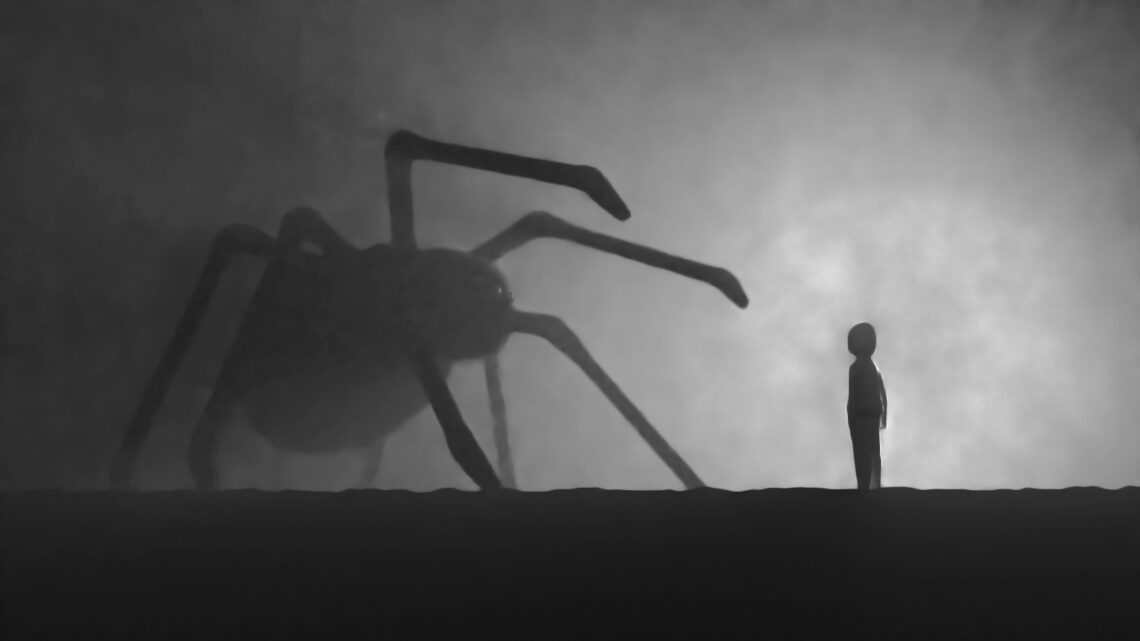
Fear and its antidote
“Fear may be inevitable, but paralysis is a choice”, says Monica Sharp.
If I may, I’d like to share some observations from three decades of living in a very conservative place, at different phases of my life – child, teen, young adult, middle-aged parent. These insights have shaped how I understand the mechanics of fear and belonging in America (and elsewhere).
No one wakes up in the morning and makes an idle decision to hate. Hate doesn’t emerge from a vacuum or from simple malice. Instead, it’s rooted in fear, and fear itself is rooted in ignorance, not ignorance in the pejorative sense, but in its most literal meaning: the state of simply not knowing.
This distinction matters because it shifts how we think about addressing division. As a people, as humans, we have to confront our fears because, as eminent psychologist C.G. Jung understood, what we refuse to face will control us and may ultimately destroy us, whether individually or collectively.
The only real antidote to ignorance is exposure and experience, and ideally, seeking encounters that lead, gradually, to relative confidence and calm.
But here’s the paradox I’ve repeatedly witnessed: for so many people, fear itself keeps them bound to one place, one opinion, one narrow channel of information.
The state of not-knowing doesn’t lead to curiosity. It transforms into a persistent and deep anxiety that in turn calcifies into defensive postures.
Years of living in a landlocked state largely unaffected by outside influences showed me the vicious cycle of cultural insulation (little ‘c’ culture – the everyday rhythms and assumptions of community life). The mechanism is brutally simple: the more you fear, the more you protect yourself and those oft-touted Loved Ones.
The more you protect, the less you’re exposed to difference or challenge. When ignorance (not-knowing) persists and non-exposure becomes a way of life, it generates further fear, which demands (you guessed it) further insulation.
I watched this cycle repeat across families, churches, entire towns. People who had never left the state, never encountered someone whose life or opinions contradicted their assumptions, never had their worldview tested by lived experience rather than media caricature.
The irony was striking: these communities saw themselves as islands of tradition in a hostile world, convinced they were under constant siege from coastal elites, from immigrants, terrorists, liberals, Arabs, people of color, Muslims, from Hollywood, from Washington, even from some nameless ‘them’.
Red state reality
After decades in the reddest state, I understood what they were saying, but I could never bring myself to repeat them or agree with them. I was fluent in RedState but refused to speak it because I didn’t believe it. My experiences had proven otherwise.
I had tested my theory over and over again and found the world an instructive and often welcoming place. I was willing to be surprised. I was willing to feel the fear and do it anyway. It’s only life, that’s all.
But in red state reality, the twin shackles of fear and ignorance bound people to their fearful futures far more effectively than any external force ever could. It’s a brutal and violent self-made reality, though the violence is often invisible. What is the right response to the violence of stunted possibility, of children taught to fear before they’re taught to wonder, of potential relationships and understanding sacrificed on the altar of safety?
The tragedy is that you’ll likely never convince the fearful otherwise. Entrenched fear creates its own epistemology, its own way of knowing (or of refusing to know). Every piece of contradictory evidence becomes proof of conspiracy. Every invitation to expansion becomes a threat to identity. The walls grow higher while the residents insist they’re only building what’s necessary for survival.
I don’t write these words with contempt but I understand if it reads that way. What I feel most is sadness. A deep, deep sadness. Sadness for what could be, for the communities that might exist if fear weren’t the organizing principle of so much of our common life.
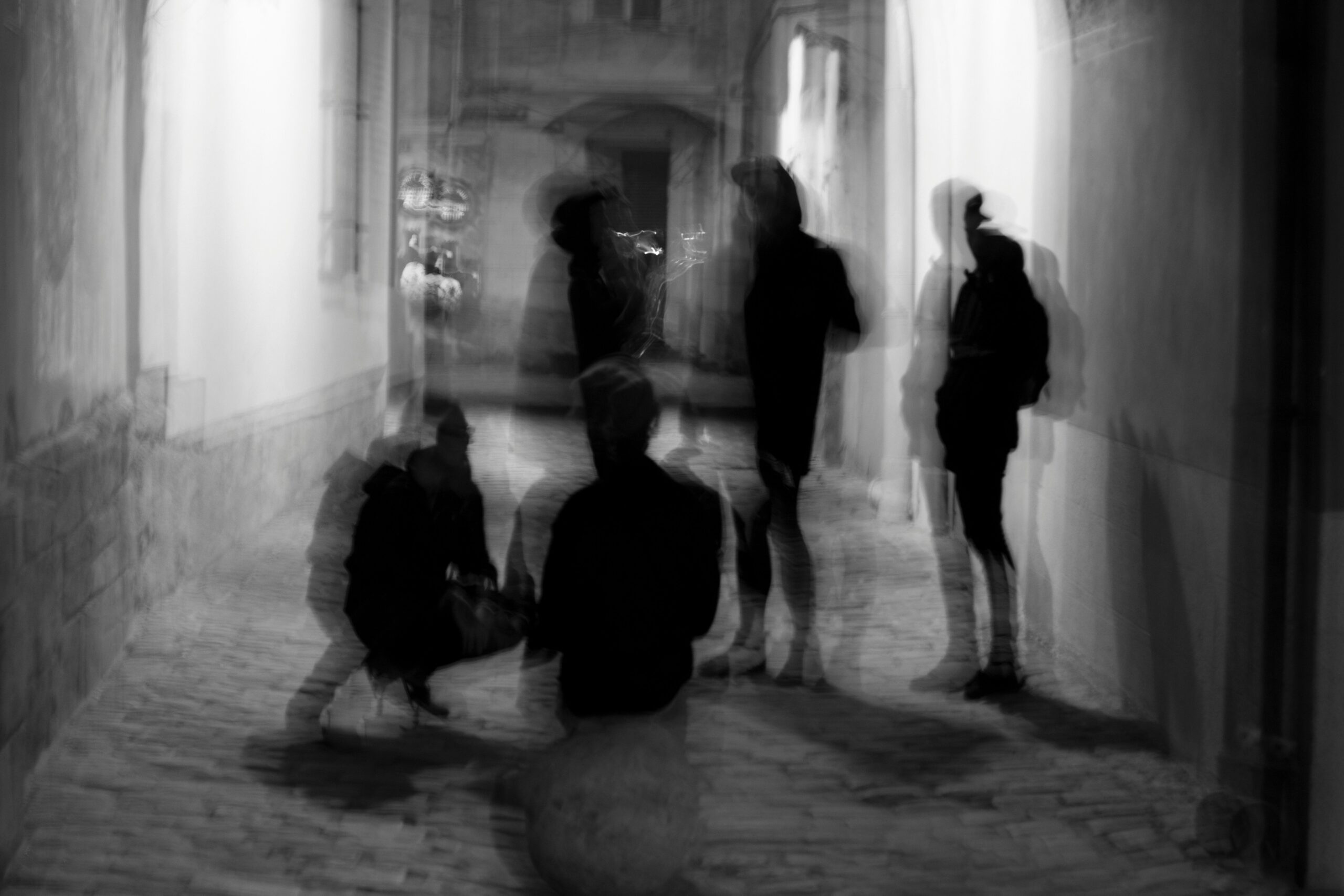
For while I firmly believe that naming our fears matters, understanding how to move through them matters even more.
I’ve come to believe that an antidote to crippling fear, to the kind of paranoia that isolates us, to the fear of the other that closes us off from inquiry and understanding, is this: a liberal arts education that frees the mind.
Of course, to paraphrase Paul, faith, hope and love (1 Cor 13:13) are good bets too, but this article specifically treats education and inquiry.
I don’t mean this in an abstract, ivory tower way. I mean it practically, urgently, as a matter of survival in a world that increasingly rewards fear over curiosity.
A fearful mind is never a free mind.
Ever.
The paralysis of fear
Fear shuts us down. When we’re afraid, we stop asking questions. We stop wondering. We retreat into what feels safe, even when safety is an illusion. Fear convinces us that curiosity itself is dangerous, that looking too closely at our beliefs, our histories, our assumptions might unravel everything we think we know.
This is where liberal arts education gets radical. It uproots fear.
It gives the mind permission to be curious. It empowers the mind over the fear of the body. And in doing so, it teaches us something vital: our fears, while often rooted in the body’s legitimate responses, are not always accurate. In fact, they can be self-harmful as well as harmful to others.
As for myself, when I was a young person I can honestly say that two things I feared most and most often avoided were new foods and born-again Christians. (Sorry, Southern Baptists.)
I also feared crime-ridden inner cities (thanks, Reagan) and nuclear annihilation (logical). I feared and dreaded death. I was terrified of an all-powerful and deeply judgmental God, and along with it, images of an assured hell after this earthly life. I feared violence.
I feared many things. And most ironically, my fear itself was the most heavy, the most shameful burden.
Was I destined to live a fearful life? Where could I turn to lay down my fear?
A debt of gratitude
I received my education in a time when a liberal arts education was possible, and valued. In Oklahoma, I completed my BA in Letters and Spanish in 1995, and after a ten-year professional hiatus from academia, my masters in Spanish in 2008. I studied abroad in universities in Spain and in France as a part of my program.
My appetite for languages was unbounded and I studied widely across both foreign language and comparative literature, always leavened with in-personal travel to knit relevant anecdotes to knowledge.
Years ago when we met, my husband (a humanities professor) and I bonded immediately over our commitment to the humanities, literature, language and travel. While I’ve always lived with my own natural curiosity, my education reinforced both my permission and my ability to examine topics that interested me, and by this I mean, the exciting and fun ones.
But more importantly, higher education gave me cognitive tools to approach frightening topics. The ones that had caused personal angst and strife: politics, history, religion, sociology, theology, psychology, and a host of other subjects, but especially the humanities, which had been a source of so much torment and conflict within my greater family.
Different factions of my extended family disagreed over politics (as does every family), and religion and faith in particular. People I loved struggled with their own temperaments and the differing beliefs of others. These small dramas played out year after year on the family stage.
And watching this as a young person, I absorbed a simple lesson: these topics can be dangerous if they are not honestly and openly confronted with both compassion and curiosity.
Curiosity over fear
A liberal arts education taught me that the danger isn’t in the questions, but in the refusal to ask them. It gave me a framework for understanding why people believe what they believe, why conflicts arise, how history shapes the present. It showed me that I could examine even the most fraught subjects without losing myself, without betraying anyone, without having to choose sides.
Most importantly, it taught me to choose curiosity over fear. That this instinct was a gift.
I want this gift I want for everyone, but especially for those paralyzed by fear. I know this burden well. The fear that asking questions means disloyalty. The fear that curiosity about ‘the other’ means abandoning your own tribe, or even your own identity. The fear that examining your beliefs too closely will leave you with nothing to stand on.
The stakes
We’re living in a moment when fear is ascendant. Fear of change, fear of difference, fear of complexity. And fear is being weaponized to shut down the very curiosity that might liberate us.
A liberal arts education, whether formal or self-directed, in a classroom or through books and conversations and art, remains one of our most powerful tools against this. Because it doesn’t just teach us facts. It teaches us how to think when we’re afraid. How to question when questioning feels dangerous. How to remain curious when curiosity might cost us something.
It teaches our minds how to be free.
An invitation
If you see yourself in those patterns of paralysis and avoidance, I offer this: curiosity is always possible. The mind can still choose to be free, even when fear is afoot.
The questions that scare us most are the ones most worth asking.
Subjects that might seem too dangerous to examine are the ones holding us captive. And the people you’ve been taught to fear are the ones who most need your curiosity, your willingness to see them fully.
Everything worth caring about is worth an earnest inquiry.
I learned this in the course of my liberal arts education. I’m still learning it again every day: fear may be inevitable, but paralysis is a choice. And so is curiosity.
I choose curiosity. I hope you will too.This article puts together, with very minor editing, two essays from Monica Sharp’s Substack page, Sharp Monica. The essays are ‘On Fear’ and ‘The Antidote to Fear’. It is republished in Adamah Media with the author’s permission.
Like what you’ve read? Consider supporting the work of Adamah by making a donation and help us keep exploring life’s big (and not so big) issues!
Monica Sharp
Monica lives and works in Florence, Italy. Her international spirit travels with an American passport but she's long since lost count of all the relevant metrics. She currently moonlights as a legal researcher for a local law firm, and prior to that, pursued careers in international education and software. Her off-hours in Italy are filled with a creative buffet of writing, art, music, reading, parenting, and more. Monica frequently writes about cultural forays, interpretive adventures, and close observation.

