Beauty is priceless
You cannot put a price on beauty and the truly valuable, argues Catalan philosopher Jaime Nubiola.
Beauty makes us more human
In a recent lecture my colleague Ricardo Piñero told us, “you cannot be a human being if you do not have a real relationship with beauty”. I liked this surprising statement because it seemed profoundly true to me.
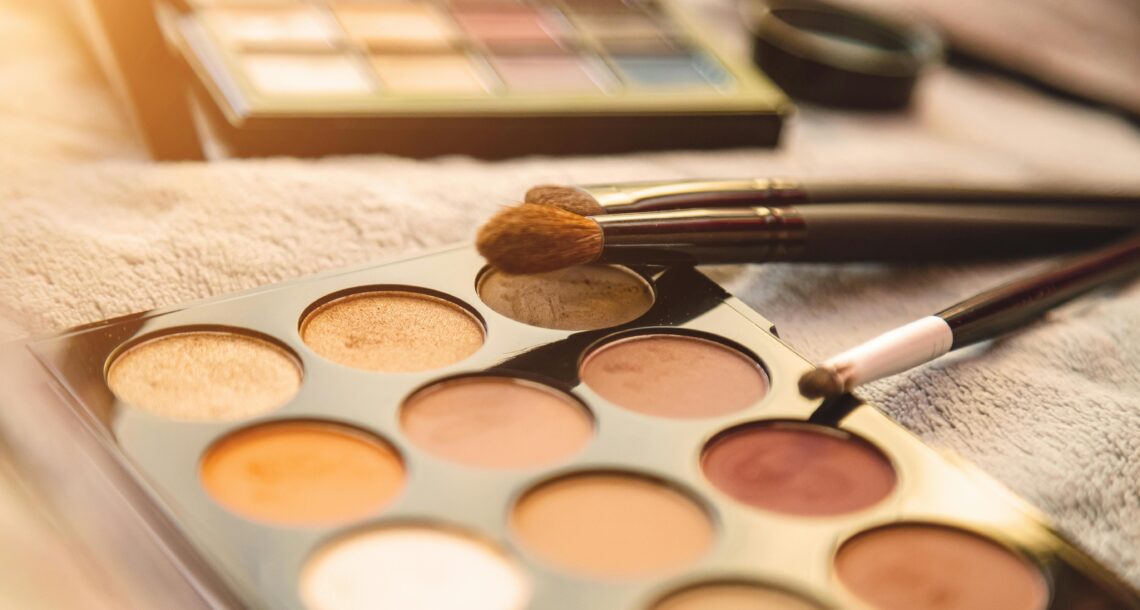
If we ‘google’ the word ‘beauty’, Piñero added, what we find is an endless string of cosmetics advertisements. It is striking that all these advertisements promise to enhance the beauty of their consumers in exchange for a considerable amount of money.
But beauty is not in make-up. It is perhaps above all in the eyes of people who have learned to look or in the ears of those who know how to listen to a piece of music. My friend added that it was the writer Stendhal (1783-1842) who defined beauty as a promise of happiness. There is much wisdom in this statement. Beauty captivates us because it helps us to be better.
During my holidays in the Aragonese Pyrenees, I realised once again that contemplating and enjoying beauty broadens our hearts and opens us up to others with affection. We all love to share beauty, and that is also why it makes us more human.
Sharing beauty
Recently, I had the opportunity to re-visit the excellent aquarium in the port of Barcelona. On this occasion, I accompanied a former student and her husband and their two pre-teen children.

We all loved the visit. But what struck me most was that the young people went ahead of us exploring the display cases and fish tanks, and that, from time to time, they turned to us enthusiastically to share their discoveries. They urged us to see the seahorses, jellyfish, and other wonderful rarities they had noticed. These were mostly beautiful, multicoloured fish with exquisite shapes that we were unfamiliar with.
Seeing the joyful excitement of these 12-year-olds led me to reflect on the idea that beauty grows when it is shared.
Beauty inspires admiration, and when we admire something, we want to share it with those we love. What a lesson in aesthetics these two teenagers gave me without knowing it!
Beauty is not promiscuity
I was struck to learn that, on 20 May, The New York Times announced the appointment of Christine Emba as a columnist. Emba is an American journalist who converted to Catholicism during her student years at Princeton. Until now, she has written for The Washington Post and is the author of the book Rethinking Sex: A Provocation (Sentinel, Penguin, 2022).
Her first article in The New York Times was entitled ‘The Delusion of Pornography’s Harmlessness’. In it, she argued convincingly that pornography is so normalised in society that, despite evidence of its tremendously negative effects, there is great resistance to criticising it for fear of appearing moralistic.
Whatever beauty may or may not be, Emba makes one thing clear: beauty is not promiscuity.
I am now reading her book and I am amazed by its courage and gentle clarity. The thesis she puts forward – with abundant reference to the experiences of many American women – is that the current supposed ‘ideal’ of sexual promiscuity actually harms women, who prefer commitment, tenderness, love and intimacy. I completely agree, and I would add – based on what I have seen so many times with my university students – that it also harms men who, in the long run, want the same things.
Emba is a woman who dares to say, with magnificent style and great kindness, what many of us may think but do not know how to express so well. As the subtitle indicates, her book is a provocation that invites us to think more deeply about sex, ‘because there is something unmistakably wrong with the way we approach sex and relationships’ (p. xiii).
The truly valuable has no price
I read with keen interest a recent interview in La Vanguardia with American philosopher Michael Sandel about his book Equality, co-authored with renowned French economist Thomas Piketty.
The headline of the interview itself highlighted the moral vacuum that is created in society when markets define what is valuable. It immediately brought to mind the apt aphorism of the Spanish poet Antonio Machado in his Juan de Mairena: “Every fool confuses value and price.”
Sandel, who wrote his doctoral thesis with the great Oxford philosophers Elizabeth Anscombe and Isaiah Berlin, explains in the interview that in contemporary capitalist society there is no room for moral debate, for dialogue on the big ethical questions, because the only thing that apparently counts, the market price, is the only thing that is valued in our society.
I emphasise ‘apparently’ because, in truth, the most valuable things in our lives are not sold on the market: peace, joy, family, friendship, clean air, nature, sunsets, etc. I am reminded of that beautiful song by the Spanish singing group Mocedades from 1974. Here’s an English translation:
I’m going to set up a market
among so many merchants
to sell hopes
and buy sunrises.
[…]
Who wants to sell with me
the peace of a sleeping child,
the afternoon with my mother
and the time I am loving?
Democratic coexistence requires moral debate, dialogue on the basic issues that affect us all. “Liberal societies”, Sandel argues, “tend to shy away from public debate on conflicting conceptions of life. This is understandable, as we disagree on many moral issues. But it is a mistake to ask citizens to set aside their moral convictions when entering the public sphere.”
The definition of what is valuable cannot be delegated to the markets.
Markets only set prices, not values. It is we, as individuals, who recognise values, and ‘it is better to debate them than to delegate them’ to the markets.
Order, friend of beauty
I was struck by an Ikea advert that said: “Life is about becoming independent, and with order, much more.” I didn’t like it: life is not really about becoming independent, but about cultivating quality relationships with people and things.

But that slogan reminded me – in contrast – of another Ikea advert from a few years ago that I found more apt: “Enjoy order.” I suspect that, in both cases, Ikea’s intention was the same: to sell us cupboards to help us hide the mess!
Around the same time, I read an article by David Brooks in The New York Times entitled ‘The Crucial Question of the 21st Century,’ which included a quote from my admired Simone Weil: “Order is the most basic of all needs.” I found this observation much more lucid than Ikea’s ‘independence’ advert.
Everyone – adults and perhaps even more so children – needs a basic order in their lives, and it is precisely this order that enhances our freedom and creativity.
Without a certain order in our minds, hearts and possessions, it is not possible to truly enjoy freedom.
Of course, those who absolutize order kill freedom, but those who absolutize spontaneity can stifle life. By exercising our freedom in the face of caprice, we bring order to our lives.
Is there a relationship between beauty and order? For St Augustine, beauty is the splendour of order. And, as various great philosophers have explained, there is certainly a connection between beauty and harmony. Beauty involves the right elements being in the right place and proportion. Could a woman with her nose on her forehead ever be considered beautiful, however well formed the nose might be?
Order, let us say, fosters and promotes beauty by allowing everything to find its right place. It contributes to harmony.
If, when we open our cupboards, what we see is disorder, our lives are probably also disordered, and that robs us of our freedom. Indeed, a tidy cupboard is a form of beauty or at least could help promote it in other areas of our lives.
The above article is based on various recent Facebook posts by Jaime and is published in Adamah with his permission. For other Adamah articles by Jaime, see here and here.
Like what you’ve read? Consider supporting the work of Adamah by making a donation and help us keep exploring life’s big (and not so big) issues!

Jaime Nubiola
Jaime Nubiola [jnubiola@unav.es] is Emeritus Professor of Philosophy at the University of Navarra, Spain. He is the author of 17 books and 150 papers on philosophy of language, history of analytic philosophy, American philosophy, C. S. Peirce and pragmatism.

