
A system created by fear: what I learned about ICE
Monica Sharp offers an Immigration advocate’s perspective on recent events in Minneapolis and elsewhere in the US.
“Is this the world we want to live in?” I keep asking myself as I watch events unfold in America. Is this the world each one of us wants, and is creating? We’ve seen this before. Is it coming to this, in America too?
Have we read our history?
Have we examined our own possibly contributing, alternatively refuting, beliefs that have collectively brought society to this inflection point? I’ve got some personal experience that I want to share related to both the news and these greater topics.
I worked in U.S. immigration as an advocate from 1997 until 2013, and then in a less direct capacity until 2019 in a related role in software development. I witnessed ICE at its inception after 9/11, and fully incorporated in 2003.
In 2006 I became a school official (PDSO and RO) overseeing the SEVIS records for some 3,000 students at every level. What I witnessed during those years ultimately drove me to leave the field.
ICE began with less-bad intentions. It has spiraled out of control.
What I saw after 9/11
ICE first came about in the legislative scramble after 9/11 with the Patriot Act. (Freedom fries, anyone?) Prior to ICE, the legacy INS (Immigration and Naturalization Service, created in 1933) was charged with all aspects of immigration management, both benefits and enforcement. It wasn’t a tenable situation. Most professionals in the field agreed on this point. So INS was divided into USCIS (benefits) and ICE (enforcement, like Border Patrol).
Starting in 2001, a few weeks before 9/11 happened, I worked as an immigration assistant at T-Mobile, supporting hundreds of foreign-born engineers who were building out the first stateside GSM for mobile network. These were educated, law-abiding employees. After 9/11, many of them, based on citizenship alone, were required to register with NSEERS – with photos, fingerprints, forms – under penalty of arrest, prison time or deportation.
They would ask me, “Monica, why do I have to do this? This is really scary.” I quickly conceded their point. They had to go to the ICE office with their families and register like criminals, even though they were just living in the U.S. with professional visas or as dependent family members.
NSEERS happened from 2002 to 2011 and wasn’t fully repealed until 2016. Most Americans didn’t notice it because they don’t understand that human rights are civil rights, not just citizen rights. But there’s a real difference between the two.
Civil rights are legal protections against discrimination and guarantees of equal treatment granted by a government to individuals within its jurisdiction, while citizen rights (often synonymous with political rights) are specific privileges, such as voting or holding office, reserved exclusively for individuals holding legal citizenship. Civil rights protect all residents, whereas citizen rights are limited to nationals.
Few notice and even fewer speak up until injustice and extrajudicial violence happen to somebody who looks like them.
Who ICE recruited
The story of ICE isn’t just about policy; it’s about who implements that policy. I’ve read extensively about how the Department of Homeland Security found and recruited ICE officers, particularly in recent enforcement expansions.
They recruited from the lowest, most isolated, and economically marginalized communities in America. They found people in hard-bitten neighborhoods, minorities and immigrants who never got a fair shake from the system, people with little opportunity and low income. This is how goon squads are formed; they are beholden, they are ‘made men’.
When the U.S. government came calling and offered these people a real job with a real salary, a chance to be a government employee with a professional title, even without professional education, training, or knowledge about the law, human rights, or working with the public, these recruits said yes. Who wouldn’t? It was a lifeline.
The recent mass departures of federal employees due to government cuts and buyouts created hundreds of thousands of vacancies that needed to be filled quickly, often without the usual vetting or training.
This is the tragedy within the tragedy. The system created ICE, and ICE recruited the vulnerable to enforce policies against the vulnerable.
Why I left campus immigration
I was no longer at ease being deputized on campus as a sort of visa overseer. The rigidity, the prejudice, the surveillance of international students under the auspices of an agency that seemed predisposed to regard them as future criminals requiring surveillance all became too much. The system wasn’t designed to protect people. It was designed to monitor and control them.
The constitutional reality
Human rights are civil rights. They are not citizen rights. If this is news to you, consult a knowledgeable constitutional attorney. The Constitution and the Bill of Rights theoretically protect everybody in the United States – theoretically.
In practice, some people are more equal than others. Anyone who has studied even a little history knows this is true. This is how revolutions foment.
What needs to change
I’m deeply sorry about what happened in Minneapolis and what continues to happen to immigrants and people of color across this country. But this isn’t new. It’s been happening consistently for decades.
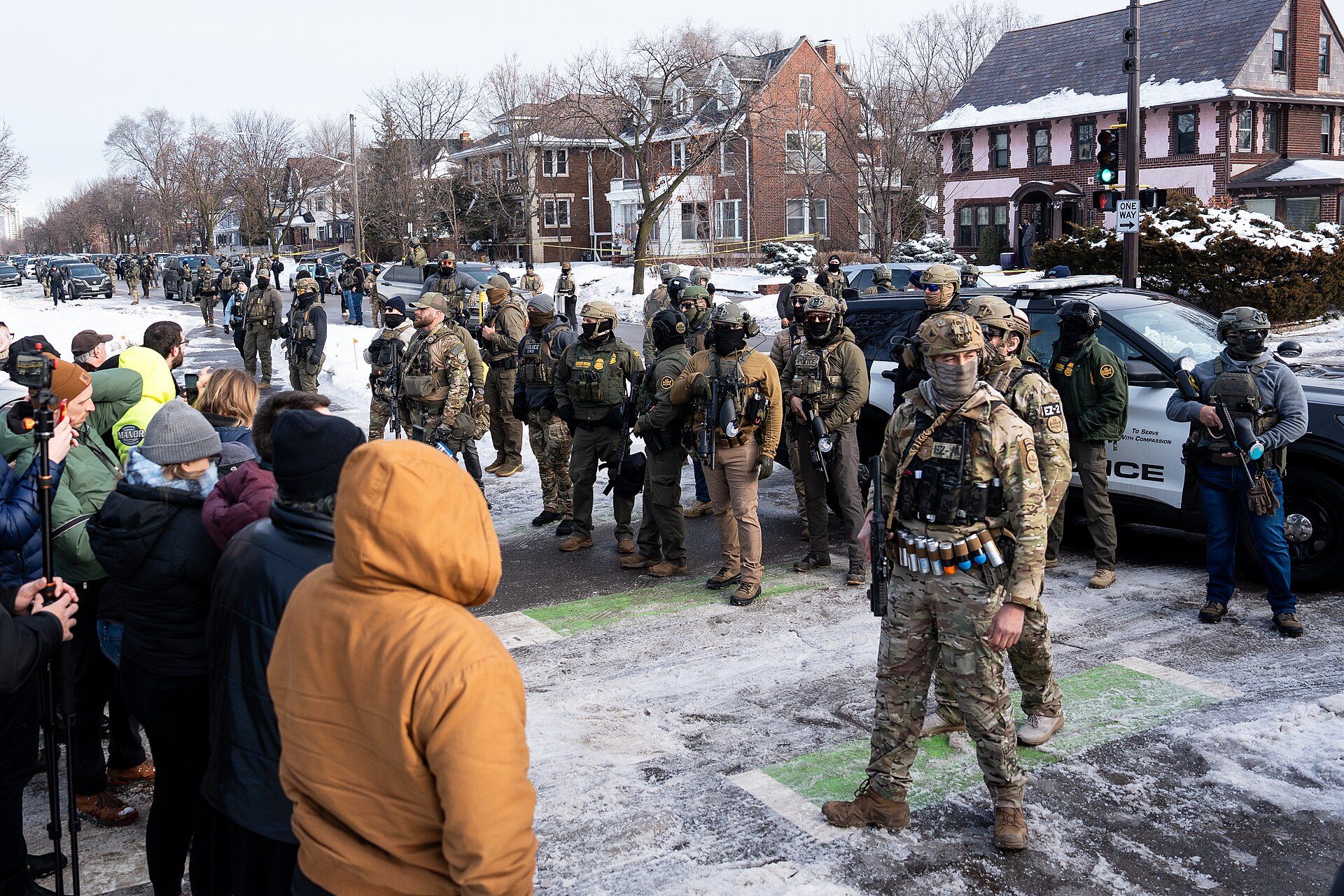
All the righteous anger about ICE needs to be redirected toward building a more just and equal society, directing our energy not just at the symptom, but at the conditions that create agencies like ICE and fill their ranks with people who had no other options.
I feel a real grief over the murders, the people that ICE brutalizes and kills. I also have empathy for the people DHS recruited into those positions under desperate circumstances.
And I recognize the deep fear of a collective leadership that knows they’re in an indefensible position and will change their beliefs as quickly as public opinion shifts to maintain and further entrench their power.
This is what I know about ICE. And this is what we need to understand if we want anything to change.
This is a very slightly edited version of an article which first appeared on Monica Sharp’s Substack. You can find it and other articles by her at https://monicasharp.substack.com/It is re-published in Adamah Media with the author’s permission.
Like what you’ve read? Consider supporting the work of Adamah by making a donation and help us keep exploring life’s big (and not so big) issues!

Monica Sharp
Monica lives and works in Florence, Italy. Her international spirit travels with an American passport but she's long since lost count of all the relevant metrics. She currently moonlights as a legal researcher for a local law firm, and prior to that, pursued careers in international education and software. Her off-hours in Italy are filled with a creative buffet of writing, art, music, reading, parenting, and more. Monica frequently writes about cultural forays, interpretive adventures, and close observation.

