
Fairy-stories and the ‘democracy of the dead’
Fairy-stories are far truer than we might think, argues Samuel Sant’Ana.
The famous poem Sir Gawain and the Green Knight, written in England in the 14th century, tells the story of one of King Arthur’s knights who receives an apparently suicidal mission.
Most critics limit themselves to the poem’s moral message and the series of temptations which Gawain has to face during the course of the narrative. But there is actually a lot more going on.
Indeed, no less than the great J. R. R. Tolkien, when he wasn’t writing his best-selling works of fantasy, also weighed into the debate in his capacity as an Oxford don and academic philologist.
In an essay about Gawain, he draws attention to the fact that the poem has a flavour which it shares with other great stories of the past.
When reading the story, you get a sense, he explains, that it wasn’t just created by just one person, but rather by a whole people.
Tolkien claims that Gawain has many elements deeply rooted in the past – its past, I mean – much more than its author was probably aware of.
We know, for example, whether the anonymous author was aware of this or not, that the character Gawain, who had already appeared in many other Arthurian legends, is derived from a hero of Welsh mythology called Gwalchmei, known for being one of the three most fearless men of the Island of Britain.
Gawain was written in what experts call ‘Middle English’. This matters because, when dealing with ancient texts, it is imperative to have a knowledge of the language in which these texts are written in order to analyse them seriously, because stories reflect culture and culture is manifested in language.
Shakespeare might have had the same ideas and used even more historical sources and references to write Hamlet if he had been born in Denmark instead of in England. But if he were Danish, Hamlet would not be the same, for the Hamlet we have exists only because Shakespeare was an Englishman and wrote it in English.
The ‘to be or not to be’ passage, for instance, would be radically different in Danish because, as it is, it is meant to have a rhythm in English, the iambic pentameter, which cannot be found in other languages.
Another text, even more important to Tolkien himself is Beowulf, an Old English poem set in Scandinavia which tells the story of a hero who fights monsters, becomes a king and dies protecting his people.
Old English scholars always argued that Beowulf was also rooted in its past, claiming that the story was brought from the Continent during the early days of the Anglo-Saxon invasion.
Tolkien went even further and wrote a short-story (in Old English as well) called ‘Sellic Spell’ (which means ‘Wondrous Story’) to show how he imagined the ‘proto-Beowulf’ would look like.
By ‘proto-Beowulf’ I mean the primitive story which existed originally only in oral form and which inspired the poet to compose his own version of it but in a more mature and definitely more artistic version of the tale.
Tolkien considered both Gawain and Beowulf as ‘fairy-stories’. Does that mean he didn’t take them seriously, seeing them as mere bedtime stories for children? The short answer is no, and we will now see why.
A different mode of imagination
In Tolkien’s most famous essay, ‘On Fairy-Stories’, he makes a distinction between fairy-tales and fairy-stories. The former genre is a product of the modern era, or rather, a dishonorable title given to a phenomenon by people who were already seeing it as a poor thing.
Take, for example, the Brothers Grimm’s most famous work, ‘Kinder- und Hausmärchen, literally Children’s and Household Tales, a collection of stories passed down through oral tradition in various regions of Germany, where the siblings collected them and explicitly labeled them as something ‘childish’.
To distinguish from such lightweight tales as these, really aimed at children, Tolkien proposes ‘fairy-stories’ as the term for more serious works, traditional and fantastical, which are also worthy of reading by adults.
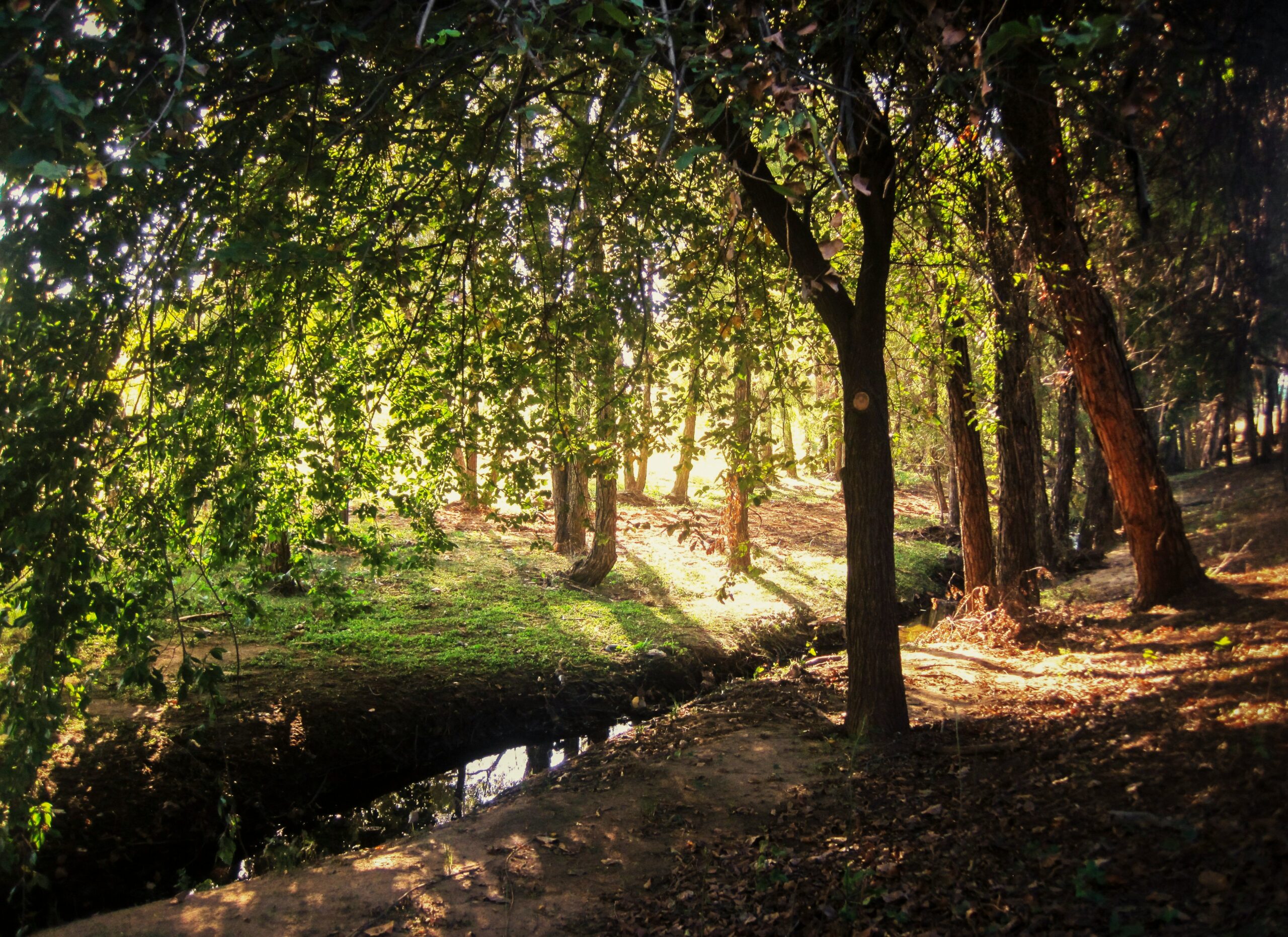
It is a place where the supernatural is natural, a place where dragons and monsters may exist, and animals may talk.
It is the world of Faërie, as defined in ‘On Fairy-Stories’, and this is the place where we can find Gawain cutting off the head of a giant green man and Beowulf fighting against the monster Grendel.
But why should fairy-stories be important today? We can easily accept that they might have been important to the poets of the Middle-Ages, but why should they matter to us in the twentieth century?
In the wake of philosophical Positivism and the Enlightenment, the scientific mode of thinking has come to dominate and, without doubt, given us many benefits, allowing us to better understand and even, to an extent, control the natural world.
But we tend to forget what it has taken from us: contact with the supernatural world, the world of dreams, and, overall, the connection both with our ancestors and with Nature itself.
This is a paradox, for while science has taught more about how Nature works, it has made us increasingly lose interest in it beyond seeing it as a quarry for exploitation.
But the Anglo-Saxon period saw things very differently. This era, from a literary point of view, can be divided into three different periods: Prehistoric Old English (c. 450–650), which is hypothetical, since there is no record of anything written down from this period; Early Old English (c. 650–900), with the first written texts; and Late Old English (c. 900–1150), with the largest portion of surviving manuscripts.
Although the language varied according to regions and periods, the daily life of an Anglo-Saxon in the 500s and in the 1100s would have been far more similar than the life of an Englishman in the 19th century compared to that of a contemporary Englishman.
Six hundred years during the Middle-Ages changed the life of men less than the last two hundred years have done for modern man.
This, of course, does not mean that technology did not evolve during the Anglo-Saxon period (writing is a technological advent, for starters), but it shows how men were more connected with their ancestors’ lives and with Nature.
Beowulf is a perfect example of this, for the poet deliberately wanted to show the lives of his fore-fathers (and, of course, those of his audience too), how they were brave enough to cross the seas and to fight with unnamed enemies to protect their kin.
The poet, already a Christian, mentions that his characters were pagan so as not to create anachronisms. But he shows enormous respect for them, even while disagreeing with them, just by saying that they did not know God yet, but were good men and that God was still always helping them.
Gawain, as well, is in danger in the poem because he was not only defending his king from a threat, but was also defending his kin, for he is a nephew of King Arthur.
And in both poems, the natural world is always a dangerous place.
It is, in fact, the same world as the supernatural world, for Grendel lives in a moor, Gawain fights a dragon while in Wales, just as Beowulf’s dragon lives in a lair in what would nowadays be Sweden.
To the audiences of these poems, dragons and monsters were a possibility. They could exist because the natural world was still very mysterious, but also because their forefathers talked about them.
Nowadays, because of the plethora of technological creations which modern man enjoys, the situation is frequently the opposite. People tend to regard men of the past as inferior, even at times stupid, and to view their accomplishments with little respect.
And the stories of the past have suffered from that same prejudice. If dragons are not real and our forefathers were wrong, what can we possibly hope to learn from them?
The great stories never end
It is often commented that reading is in decline and that consuming fiction itself, whether through books or screens, is also decreasing among the newest generations.
According to a study by the University College London, daily reading for pleasure has decreased by more than 40 per cent over the last two decades in the United States, with many other countries following the same trend.
Since the pandemic, going to the movies has become increasingly rare, and people are getting out of the habit of watching movies in general, since concentration for two hours on one single thing has apparently become a challenge in the swipe culture.
Going to the theatre has also become a niche interest, limited mostly to intellectuals, despite theatre being considered since ancient Greece, and also in Shakespeare’s time, as a popular art. So, why is this happening and how to remedy it?
And is there any link between this and the fact that people are more dependent on antidepressants in the last decade than ever before, and many other symptoms of poor mental health are becoming normalised?
For, as surprising as it might seem, the apparent ‘escape’ to the fantastical world can actually be a very positive contribution to mental health.
It seems that reality has overwhelmed people’s minds. The abundance of information which the internet offers, and the profusion of opportunities for leisure in the modern world, might perhaps be more than we can take.
Certainly there seems to be even less space for imagination, for people forget that the world is still a very mysterious place, and that existence is even more an unsolved issue.

Didn’t Freud point out the significance of why we spend almost a third of our lives dreaming? Without dreams, without fantasy, there is no life, and without that, people get sick.
That is the role of fairy-stories, to remedy this need of the human person, to allow people, if only for a brief moment, to empty themselves and experience another reality.
In Greek literature, Aristotle called this katharsis, a remedy for the soul, something that should be present at the end of every good tragedy, when the emotions of the characters reach a peak, and after that, people return to their usual ways of thinking, they get their lives back and revert to themselves changed by that experience.
Fairy-stories provide the utmost katharsis, since the audience is placed in a different setting, which might possibly be similar to our world, in the court of King Arthur, or in the meadhall of King Hrothgar, but suddenly a green knight or a monster appears and we will have to face them and then return home as a different and wiser person.
These narratives once were myths, present in writing, painting, sculpture, drama and various other arts, but now have been reduced to mere ‘stories’ to be labeled as fairy-tales or children’s literature.
The fantasy mode is what people call a story which surpasses reality, through imagination. People have recourse to such stories in part because they cannot deal with reality, with the real world. The medieval world had much about it that was unpleasant and no doubt people told those stories also to escape the harsh realities of daily life.
But, in the end, fantasy is also about reality, albeit in a different register, and is just a different way to express it.
Without Gawain’s beheading challenge from the fantastical green knight the audience would not understand by the end of the poem the author’s critique of the chivalric code of honour, showing how even the greatest and bravest knight of all is human and is going to fail sometimes.
Without the monsters and the fights, people would not mourn Beowulf’s death and understand that a man, even one who has fought with the mightiest beast one could imagine, cannot escape from the final enemy: death.
Fantasy uses imagination as a language to tell us about human nature. It is a lesson about life in a language you have to learn and it cannot be told in a different one. Hamlet is always going to be an English play.
Fantasy deals with reality through symbols because there are some things which are so deep and hard to pass on through the ages that they cannot be merely explained logically. They have to be put into story form so that people can get the message.
In G. K. Chesterton’s classic work Orthodoxy, he has a chapter entitled ‘The Ethics of Elfland’, in which he describes tradition as ‘the democracy of the dead’.
By this he means that tradition takes into account the thinking of past generations, understanding that what we have now is only possible because of what many others in the past discovered. Fairy-stories in their own way capture this essential truth, that teaching that is passed on from generation to generation in a symbolic way, through fantasy.
Fairy-stories are what our fore-fathers have bequeathed to us, what they discovered and what they have learned from their own ancestors. In the end, it is a matter of tradition, to respect the democracy of the dead, to accept that we, as advanced as we might think our period of history is, still do not know everything.
And if we should trust in anything, we should trust in the great stories that survived because they are real.
For as Chesterton said, “Fairy tales are more than true: not because they tell us that dragons exist, but because they tell us that dragons can be beaten.”
Just as Frodo Baggins, from Tolkien’s own The Lord of the Rings, grew up listening to the stories of his uncle Bilbo with the utmost respect and then found courage through them to fight his own battles, so the modern man or woman must remember the long tradition of their ancestors.
In this way we will have the humility to accept that we still do not know much about life and the universe, and that what people told us in the past might be more nourishing for our lives, even through an allegorical lens, than the latest tweet or social media post of the day.
Like what you’ve read? Consider supporting the work of Adamah by making a donation and help us keep exploring life’s big (and not so big) issues!

Samuel Sant’Ana
Samuel Sant’Ana has a MPhil in Literary Studies from the State University of São Paulo (UNESP/Brazil) and is currently doing a PhD on Tolkien and Medieval Literature in England, which has led him to spend a term at the University of Oxford as a recognised student by the English Faculty. He is a member of the Tolkien Society and one of the founders of the ENT (Tolkienian Narrative Studies), a Brazilian study group devoted to the works of the author.

