Bad Bunny was onto something
Loving a real person beats champagne activism every time, thinks Mary Rose.
The most useful thing I have heard about the state of the country in the past few months was said by Bad Bunny.
I want to first say that I am not his target audience. I can’t say my Spanish is perfect and I can’t name a single song of his, so this is not a fan piece.
That said, I was surprised how much his words stayed with me. And in trying to understand why, I think I have landed on something true about this moment that most of our discourse is getting wrong.
Be pro-, not anti-
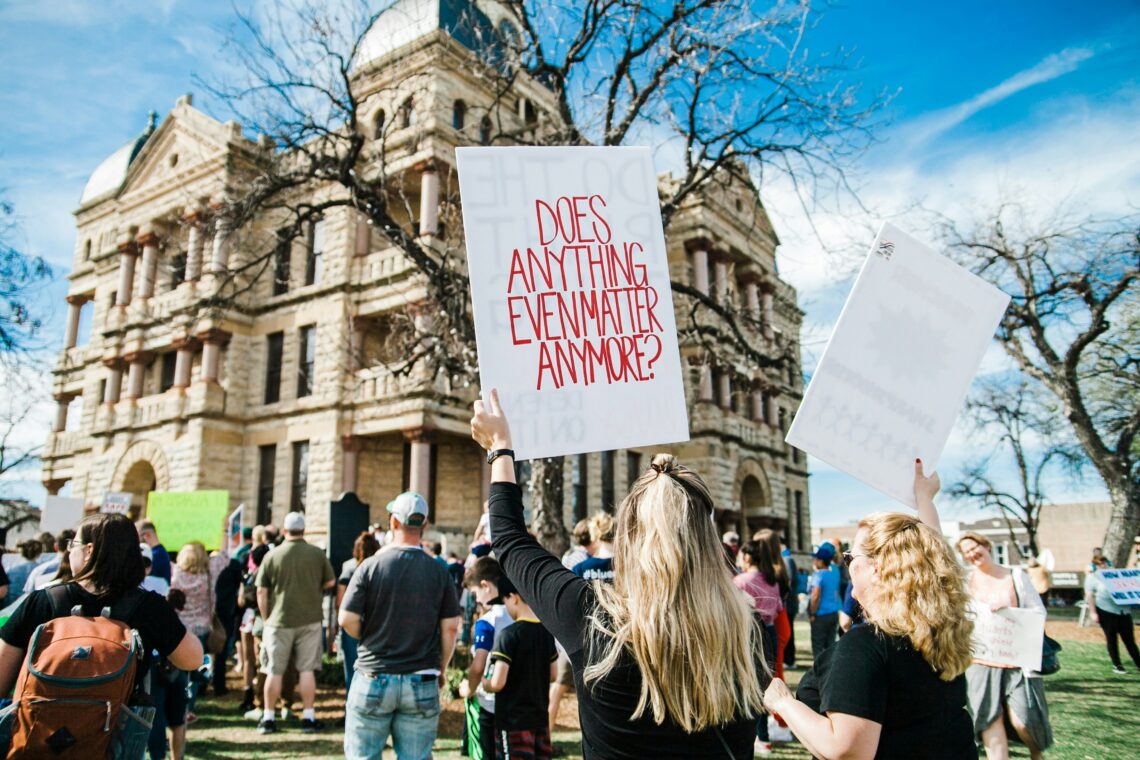
I’m sure this article was delivered to you as you scrolled between wars, crises, injustice, corruption, the worst of the world’s suffering in real time. We live in an age of total moral exposure.
While your ancestors were exposed to local suffering, you are exposed to planetary suffering. And yet your actual capacity to respond – your sphere of action, your concrete power to change anything – has not expanded at the same rate as your awareness.
I find that asymmetry spiritually dangerous because it opens up the temptation to believe that if you have identified the right villains and curated the right outrage, you have done your part. But you haven’t. You’ve only made more people upset about the evil that’s going on.
“You don’t become holy by fighting evil. Let evil be. Look towards Christ and that will save you. What makes a person saintly is love.” — St. Porphyrios
I believe God places each of us in a specific time, a specific community, a specific set of relationships and obligations. I can’t say whether the world is objectively worse now than it has been at other moments in history — historians can argue that question. But I know this:
obsessing over evil is its own kind of unreality.
And I believe it can turn into a kind of spiritual escapism, a way of fleeing the particular demands of the actual life we’ve been given. But we were not chosen for this moment in order to be paralyzed by it.
Genuine activism, the kind that changes anything, is oriented toward a good, not just against an evil. It aims to produce love, not just awareness of bad things happening.
I think a good example of this is Lila Rose, the founder of Live Action, a pro-life organization. Whatever your view of her politics, she is a useful example of compelling activism precisely because her public work is overwhelmingly about what she is FOR, not just what she is against. While she is anti-abortion, more than that, she is PRO-life.
Even in debates, as when she debated 25 pro-choice advocates on Jubilee, she goes out of her way to name the good and be warm and charitable to her opponents, because she has said it’s much more important to win hearts than arguments.
I point to Lila because she has spent years not just exposing an injustice, but building an alternative — humanizing what she loves rather than simply demonizing what she opposes.
Everything that hurts us hurts because there is a good being harmed. In Lila’s case, abortion hurts because preborn life is so precious and so good. In Bad Bunny’s case, the treatment of immigrants hurts because that community is so precious and good.
There is a lot to be hurt about. If what you are seeing upsets you, can you name the good that is being threatened? Not just what is wrong, but what is precious? If you can — run toward that. Pour into it. And let that be the center of gravity for you.
Which brings us to Bad Bunny. In his Grammys acceptance speech, that is precisely what he said:
“I know it’s tough not to hate on these days. I was thinking sometime we get… the hate get more powerful with more hate. The only thing that is more powerful than hate is love. So, please, we need to be different. If we fight, we have to do it with love. We don’t hate THEM. We love OUR people, we love OUR family, and that’s the way to do it. We love.”
Real ties
What struck me about Bad Bunny’s Grammy moment was not the speech itself, but the evidence that he had actually earned the right to say it.
You don’t have to have personal ties to a good before you can care about it. We are always called to fight for good and if you believe the Holy Spirit is calling you to speak out, I am not here to tell you that calling is false.
But I will say this: all the most compelling activism does have some ties to the good they’re advocating for. Look at the activists who have genuinely moved things, and you will almost always find someone who has wept with these people, eaten with them, stayed when they could have left.
“Each one has his place. It matters not a whit whether it be glorious or modest… It is the plan which is grand. One is great only in occupying one’s own place within it. The most modest place is quite incomparably great, provided only that it is inhabited with faithfulness.” — Yves Congar OP, Une passion: l’unité. Réflexions et souvenirs 1929–1973, éd. du Cerf, Paris 1974, p. 112.
Bad Bunny has real ties to this community. His activism is not abstract solidarity against something bad. It is specific love for a specific place, expressed at personal and professional cost, in a room full of celebrities wearing the same message (‘ICE out’) on their lapels.
The difference between his tears and most of the activism we encounter is the difference between grief and performance. Grief requires an object. You cannot grieve in general; you grieve for something particular, something that has cost you something. Some good you actually loved. Performance requires only an audience.

Bad Bunny declined to organize his public message around opposition at all. He named love — not resistance, not speaking out — as the more powerful force.
But his most powerful argument for his cause came not in his speech but in his Super Bowl halftime show.
It was a celebration. Entirely, joyfully, embodied celebration: dancing that felt like something lived rather than choreographed, a wedding, a fruit stand, a house that seemed to arrive from shared memory rather than a marketing deck.
He did not argue for his community’s dignity. He displayed it. He said: here is this thing I love. Look how much I love it. Let me honor it in front of you.
In an era of ironic detachment – when so much art signals its own awareness, its own refusal to be caught caring too much – it was genuinely arresting to watch someone simply celebrate.
He could have used those twelve minutes to broadcast the suffering. Instead, he answered the question that most activism forgets to ask: what is the good that is being threatened? And his answer was: this. This dancing. This wedding. This fruit stand. This community.
This is what the best art has always done – what Catholic theology calls the sacramental imagination. It discloses and makes visible rather than argues.
The best activism works the same way: it makes the good so real and so beautiful that people feel compelled to defend it.
And that’s exactly how I felt.
Against the backdrop of that beautiful celebration, I want you to think for a moment about the activism you engage with day to day.
Test
As you scroll and everyone tells you about how bad everything and everyone is, here is the test I ask you to apply: does this raise my soul toward something? Does an encounter with this work leave me loving better, acting differently?
Look honestly at the people you are following. What is the ratio? How much of what they produce is oriented toward a good – toward something worth protecting, something beautiful, something that makes you want to be better – and how much of it is simply: we have to call this out, look how bad this is, can you believe this, I hate this bad thing and here’s why it’s so bad?
If the people filling your feed only ever criticize – if every politician is corrupt, every institution is captured, every Christian is a hypocrite – I want to ask you in good faith: is this raising your soul towards the good? And should you be listening to this person?
The point is simply to love in right order. There’s a place for anger, there’s a place for speaking out, but there is an order to it.
It is much easier to love humanity than to love your neighbor.
The Church has always known this. It is, in part, why the commandment is so specific. It is not to love the world or to love justice in the abstract.
Love your neighbor — the person proximate to you, the one whose face you can see, whose needs arrive with the inconvenient texture of real life. When a scholar of the law tried to widen the circle — and who is my neighbor? — Jesus told a story about a man bleeding on a road and the stranger who knelt down beside him.
Virtue signaling is not, at its root, a political problem. It is a spiritual one. It is the use of moral language to perform alignment rather than produce charity. And its appeal is obvious: it is nearly costless. A repost is free. A statement of solidarity requires no sacrifice, disrupts no schedule, and asks nothing from your actual life. It comes with immediate social reward – likes, affirmation, membership in the community of the concerned.
Dorothy Day, who spent her life in the actual company of the poor and not merely in solidarity with them, cut close to this when she said: I really only love God as much as I love the person I love the least.
Public outrage at distant wrongs can function as an escape from the demands of your actual life. A person can feel genuinely morally alive — even righteous — while using that energy to avoid the one relationship, the one person, where something real is actually being asked of them.
Calling out what strangers are doing wrong is a remarkably effective way to avoid examining what you are doing wrong. The scroll becomes a substitute for the examination of conscience.
Again: love in right order. There’s a place for anger, there’s a place for speaking out, but there is an order to this.
The Church’s principle of subsidiarity holds because human problems are best addressed at the most local level possible – not because distant suffering doesn’t matter, but because love that cannot be practiced close to home tends not to be love at all. It tends to be sentimentality.
“We lost our innocence in the Fall, and our turn to it is through the Redemption which was brought about by Christ’s death and by our slow participation in it. Sentimentality is a skipping of this process in its concrete reality and an early arrival at a mock state of innocence, which strongly suggests its opposite.” — Flannery O’Connor
The most honest question we can ask about our own public moral posturing is not am I right? but what does this cost me?
And the even harder question: what has actually been entrusted to me? Not what do I have opinions about – but which community, which relationship, which particular person has been given to me to love?
The corporal works of mercy are numbered and bodily for a reason.
Mother Teresa, my confirmation saint, asked how to bring peace to the world, told people to go home and love their family.
It easier to perform love precisely because it costs nothing and touches no one. Not everyone is called to weigh in on everything. But everyone is called somewhere, to someone. The question worth sitting with – the one that tends to get drowned out by the noise of our collective moral performance – is whether you are showing up there.
Don’t post, love
Let me say something clearly before I close: I am not writing this to shame anyone who has posted, retweeted, or changed their profile picture for a cause they believe in.
Most people doing that are doing it in good faith. They see something terrible happening and they want – in whatever way they can, with whatever they have – to register that it matters. That impulse is not corrupt. It may even be, in a particular season of someone’s life, exactly what they are able to give. God may be calling you to exactly that. I’m not in a position to say otherwise.
I don’t want to stop you. I want to offer you something more to consider.
Because here is what I have found, in my own darkest moments: the most effective antidote to despair about the state of the world is not finding better arguments, more righteous causes, or a bigger platform. It is going to find someone to love. Someone specific. Someone in front of you.
When Bad Bunny said the only thing more powerful than hate is love, I believe he was offering the thing that had actually sustained him.
In moments when I have felt most overwhelmed by what I could not change, overwhelmed by my own difficulties or injustices, finding one concrete person to love has made the difference.
The world is heavy. If you are discouraged, if you are lonely, if the weight of everything wrong is pressing down on you – go find someone to love. It will do more for them than a post ever could, and it will do more for you than you know.
We are called to be so filled with the love of God that an encounter with us is an encounter with that love. That we are, in some real sense, the Good News we proclaim – not just its press agents. The saints who transformed the world were not, for the most part, the ones who argued most effectively. They were the ones whose presence was itself an argument.

Pope Leo, in his recent peace vigil prayer, said something Catholics should sit with: prayer is not passive comfort. Prayer is action. Praying is not as a substitute for caring, but as an honest acknowledgment that the power to end injustice does not live in your feed.
Mother Teresa once met with Hillary Clinton to discuss abortion. They obviously disagreed, and yet Mother Teresa met with her. Sat across from her. She was not there to score points or generate content. She went because she loved Hillary Clinton – because she desired her good, because the encounter mattered more to her than winning the argument.
The harder thing underneath all of this is that justice on this side of heaven is not going to be complete. It is not going to be fully satisfied. The wrongs will not all be righted, the corrupt will not all be exposed, and if God gave us the justice we are demanding for others, we would be in the rubble too. Because anything we hate, we have done. Maybe not in the same form, maybe not to the same degree – but the same root. Pride. Fear. The desire to be seen as good without the cost of actually being good. Grace is not the reward at the top of the ladder. It is the ground we are all standing on, all the way down.
I have had my own experiences of injustice and I found that the greatest relief came not from vindication but from understanding that this side of heaven is hard, that the people who wronged me are broken in the same ways I am broken, and that wanting them destroyed was not justice. It was a demand that God take my side in a war where I was not as clean as I wanted to believe.
You are called to love your enemies. And if you cannot locate even a trace of genuine love for the people you are criticizing – if the outrage has become its own reward – it is worth asking honestly whether what you are doing is witness, or something else entirely.
Bad Bunny said that the only thing more powerful than hate is love. The Church has been saying the same thing for two thousand years, in language older and deeper than any news cycle: love your neighbor. Love your enemy. Love the people you are most certain deserve it least.
For other stimulating articles by Mary Rose, see her Substack Blonde Thomist. This article is re-published in Adamah Media with her permission.

Mary Rose
Mary Rose is an international law journalist based in San Francisco, California. She studied Law & Society alongside sports reporting for NBC at Purdue University, where she had an extraordinary encounter with the Eucharist and fell in love with her Catholic faith through campus ministry. Mary Rose has worked on communications and migration justice initiatives for the Church nationally and internationally. For fun, she writes about theology in art and culture on her Substack, 'Blonde Thomist'.
